The Independent Uganda: You get the Truth we Pay the Price


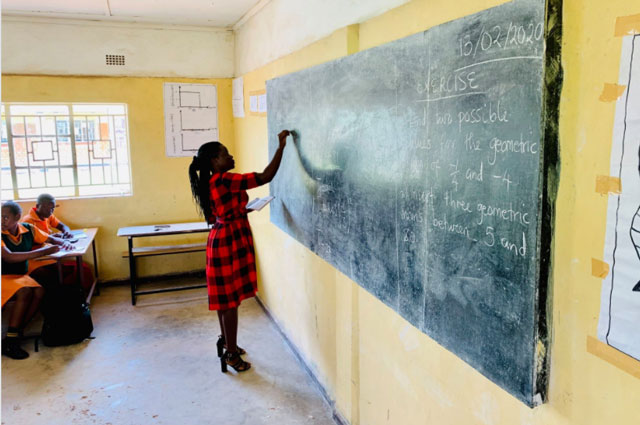
COMMENT | IVAN SSERUNJOGI | In the just-concluded year, several reports indicated that Namutumba District faced a high teacher absenteeism rate, and the sector was allegedly rife with the recruitment of “incompetent teachers”.
Such reports alarm the public, suggesting a collapse in teacher accountability as the academic year 2026 is set to begin. Yet, as with many education debates in Uganda, the reality is more complex than a single statistic.
Teacher absenteeism is real and negatively affects learning outcomes. However, focusing solely on absences or labelling teachers as “incompetent” oversimplifies the problem and ignores systemic factors.
Many rural teachers manage classrooms of 70 or more learners, lack staff accommodation, face overwhelming workloads, and receive minimal supervision. These structural barriers, not personal negligence, often underlie poor performance.
Concerns about “incompetent teachers” often reflect gaps in teacher preparation rather than unwillingness. Shaming teachers does not improve performance; structured coaching, mentoring, ongoing professional development, and supportive working conditions do.
The Inspect & Improve (I&I) programme model provides a practical blueprint. Since 2019, Promoting Equality in African Schools, in partnership with the Directorate of Education Standards, have piloted and scaled a school inspection and improvement approach across government secondary schools.
In a 2019–2021 pilot of ten schools in Eastern Uganda, 88% of school leaders reported improvements in leadership and management, while around 70% observed better teaching quality, teacher and student attendance, and student safety.
These findings were reported by the National Foundation for Educational Research (NFER) based on the evaluation of ten government secondary schools in Eastern Uganda.
Following the pilot, the I&I programme has expanded to over 200 rural government secondary schools across Uganda, including the Western and Northern Uganda regions. Results show that disadvantaged students, often starting behind, make faster learning progress and achieve higher exam results.
With the model, gains are driven by daily presence tracking, routine classroom observations, instructional coaching, continuous professional development, structured schemes of work, and peer learning communities.
Attention to welfare, like manageable workloads, accommodation, and supportive school cultures, reduces absenteeism because teachers feel valued.
Although data is not disaggregated by region, the Eastern pilot and nationwide expansion indicate that systemic support rather than blame drives better attendance, pedagogy, and the quality of school leadership.
These lessons are directly applicable to Namutumba and other rural districts.
What Uganda needs is systems thinking, not finger-pointing. Support-based accountability, strong instructional leadership, effective school improvement and support approaches, teacher development pipelines, and better working conditions are critical.
Teacher absenteeism is a symptom of weak supervision, inadequate support, and poor working conditions, not merely a disciplinary problem.
The conversation should shift from ‘Why are teachers absent?’ to ‘When will we adopt systems that help them stay present, motivated, and effective?’
******
 The writer is a Senior Inspector of Schools at Peas Uganda