The Independent Uganda: You get the Truth we Pay the Price



Low earth orbit satellites operated by US tech giants are launching to offer internet services to under-served African communities. How should the continent greet their arrival – and how can African nations play a more active role in the space race, asks Lennox Yieke.
Africa’s space economy has long been dominated by state-backed programmes focused on launching and operating large, geostationary (GEO) satellites for broadcasting, communications and defence. In recent years, however, the private sector has taken on a more prominent role with the launch of low-earth-orbit (LEO) constellations that deliver high-speed internet.
Orbiting between 160 km and 2,000 km above earth, LEO satellites are close enough to the earth’s surface to deliver faster, more reliable internet connectivity than traditional GEO systems which orbit 35,786 km away from earth.
Starlink, the satellite internet division of Elon Musk’s SpaceX, is the global leader in this domain. It had launched a total of 10,790 satellites into orbit by the end of 2025 – a significant increase from 7,610 in 2024, 5,658 in 2023 and 3,664 in 2022.
Starlink, which launched its first batch of LEO satellites in 2019, currently accounts for roughly 61% of SpaceX’s total revenue and remains its only profitable segment. It closed 2025 with 10.3m subscribers across 164 markets worldwide and posted annual revenues of $11.39bn, according to SpaceX’s filings with the US regulator the Securities and Exchange Commission ahead of its initial public offering in June.
Global giants double down on Africa
Starlink debuted in Africa in 2023 with a launch in Nigeria and has since expanded to 27 countries reaching an estimated 500,000 users. While the continent currently accounts for only a fraction of Starlink’s total revenue and global user base, its growth potential is significant.
Roughly 400m Africans remain offline and 250m live beyond the reach of fibre or mobile networks. Extending terrestrial infrastructure to many areas is not commercially viable as the costs of building fibre networks or mobile towers in regions with low population density are too high for telecom operators or public budgets to absorb. LEO satellites, deployed by wealthy global corporations, offer a pragmatic way to bypass this challenge.
Against this backdrop, Starlink and some of its competitors have ramped up investments in Africa in recent years in a bid to reach the unconnected. Analysts anticipate that the uptick in investments will translate to stronger growth for the sector in the years ahead. Estimates of the LEO market in Africa and the Middle East range between $180m and $900m in 2024, projected to between $600m and $1.3bn by 2032 or 2033.
Meanwhile, global tech giant Amazon has made its foray into Africa’s satellite internet market with the launch of Amazon LEO (formerly Project Kuiper) in Nigeria. The Nigerian Communications Commission granted Amazon LEO a seven-year licence, effective from 28 February, to operate a constellation of over 3,000 LEO satellites over the country.
Amazon LEO also applied for a satellite-internet licence in Kenya in April. There it is operating through its local subsidiary Amazon Kuiper Kenya. The Kenyan authorities are still reviewing the application. If granted, the licence will run for 15 years and will require a joint venture with a local entity with at least 30% Kenyan ownership within three years – a standard rule for foreign telecom operators in the country.
Starlink faced a similar requirement when applying for a licence in Kenya, but successfully negotiated a waiver, according to local reports. Nevertheless in South Africa, where a similar local ownership requirement is in force, authorities have been reluctant to grant any exemptions, indefinitely delaying Starlink’s planned entry into the market. Starlink’s licence application has also been turned down in Namibia due to local ownership requirements.
While Amazon’s arrival in the satellite internet market adds competition and choice for users, its threat to Starlink’s dominance remains distant. As of mid 2026, Amazon had launched 367 operational satellites into orbit, which pales in comparison to Starlink’s fleet of more than 10,000 active satellites.
Last-mile connectivity still a challenge
Temidayo Oniosun, a research affiliate of MIT Media Lab and the founder and managing director of consultancy Space in Africa, welcomes the “intense competition” that satellite internet providers like Starlink have brought to Africa’s telecoms industry.
He cautions, however, that despite the optimism, satellite internet has yet to decisively resolve the last-mile connectivity challenge in remote and rural parts of Africa.
“When you look at the connectivity landscape in Africa, the majority of cities are doing very well. It’s mostly in the rural areas where we still have people unconnected,” he tells African Business.
“Every internet operator in Africa says they are bringing connectivity to the rural and remote areas, but that is not necessarily what is happening.”
Oniosun notes that, even with players like Starlink, the majority of subscribers are concentrated in urban centres rather than rural areas where the unmet need for connectivity is greatest.
“Starlink’s competition is more with existing service providers rather than capturing an entirely new market,” he says.
“The expectation typically is that with Starlink someone in a remote village in Africa can access connectivity. But what we see is that Starlink is actually competing with telecom operators and fibre connectivity platforms in the cities.”
This is unsurprising, he argues, citing the high cost of subscribing to satellite internet services like Starlink as a major barrier in rural economies where incomes are typically lower than urban areas.
With setup costs of between $300 and $500 for the standard hardware kit and monthly subscriptions of around $50, Starlink’s pricing in Africa remains far beyond the reach of most rural households. This explains why most of its subscriber growth on the continent has emanated from wealthier cities and urban markets.
From competition to cooperation
Starlink’s entry and rapid growth in Africa initially rattled local telecom operators, who feared that it would chip away at their market share and competitiveness in the lucrative internet market. These fears have since subsided as more telecom operators seek strategic partnerships with satellite providers to extend their reach into rural and remote markets.
The shift is driven largely by direct-to-cell satellite technology, which allows satellites to act like mobile phone towers in space, enabling ordinary 4G and 5G smartphones to connect directly to satellites without the need for costly dishes or specialised hardware. This allows users in remote areas to access satellite internet at standard mobile tariffs, eliminating the affordability barrier that keeps many offline.
In December last year, Airtel Africa partnered with SpaceX to introduce Starlink’s direct-to-cell satellite technology to all its 14 markets. Airtel Africa customers with compatible smartphones in regions without terrestrial coverage will have network connectivity through Starlink. The service supports text messaging; the USSD (unstructured supplementary service data) used for example by many banking services; mobile money transactions; and select data applications such as WhatsApp, Airtel Africa says. It notes that additional high-speed data capabilities would be introduced as newer Starlink satellites are deployed.
Dinesh Balsing, Airtel Nigeria’s CEO, noted that the move to partner with Starlink is aimed at closing coverage gaps in deep rural and hard-to-reach areas. He stressed that the collaboration is distinct from Starlink’s existing service that requires users to install routers and dishes as well as pay monthly subscriptions.
“This is not about buying a Starlink kit or putting anything on your roof. This is direct-to-mobile connectivity. Customers with compatible 4G or 5G smartphones will be able to connect directly to satellites when they move into areas where there is no terrestrial network.”
AST Spacemobile, a US-based satellite operator, announced a similar deal this March with Axian Telecom, which operates mobile networks in Madagascar, Comoros, Tanzania and Malawi.
“Our collaboration with AST SpaceMobile will enable millions to access mobile services without new hardware or network buildouts,” said Abdalla Nasser Al Thani, CEO of Axian Telecom.
AST Spacemobile says that its vision with this partnership model is that end users “will not need to subscribe to the SpaceMobile Service directly through us, nor will they need to purchase any new or additional equipment”.
“Instead, users will be able to access the SpaceMobile Service when prompted on their mobile device that they are no longer within range of the land-based facilities of the MNOs [mobile network operators].”
This model, the company notes, is attractive to MNOs because it offers them a low-cost model to acquire and serve customers in areas outside terrestrial coverage. “The SpaceMobile service is expected to be highly attractive to MNOs as it will enable them to improve and differentiate their service offering without significant incremental capital investments. [It] is expected to enable MNOs to augment and extend their coverage without building towers or other land-based infrastructure, including where it is not cost-justified or is difficult due to geographical challenges.”
Amazon says LEO was created to help address this. “Millions of people in remote parts of Africa have no connectivity at all. Amazon Leo, Amazon’s low-earth-orbit satellite network, was created to help address this. “
It says it will work with Vanu – a provider of mobile network equipment and services with offices in the US, Rwanda and India – to help bring internet to rural communities across Africa.
“By using Amazon Leo to provide cellular backhaul, Vanu can place towers virtually anywhere in Africa and provide faster, higher-quality connectivity with simpler installation and lower costs. This enables operators to serve under-served customers and expand their businesses, while providing vital, high-quality connectivity to entire communities for the first time,” Amazon says.
Vanu will start to use Leo to expand connectivity in South Africa and expand from there, the firm adds.
Not just telecoms
Beyond internet connectivity, satellite technologies in Africa are used for a variety of applications, including border surveillance, maritime monitoring, resource management and wildlife protection. Much of this is publicly funded; governments view these applications as critical to sovereignty, security and sustainable development.
The main hubs on the continent are Egypt (14 satellites launched), South Africa (12), Nigeria (7), Algeria (6) and Morocco (5). A total of 21 countries on the continent have active space programmes, 18 of which have launched at least one satellite. Overall, the continent has launched a total of 65 satellites and there are plans to more than double this over the coming years, with more than 120 additional satellites in development and expected to be launched by 2030.
The race to launch more satellites is largely driven by security and economic considerations. Satellites help governments monitor porous borders vulnerable to terrorism, smuggling and human trafficking. At sea, satellites safeguard exclusive economic zones against illegal fishing and piracy.
Resource-rich states use satellite data to track illicit mining, logging and oil exploitation. Conservationists rely on satellite-enabled collars and geospatial tracking to combat poaching and monitor endangered species.
Agriculture has also become another critical frontier for satellite technologies in view of the threat posed by climate change. Satellite data on rainfall, soil and crop health is helping farmers boost yields and reduce losses, strengthening food security and securing incomes and livelihoods.
In view of the growing importance of space assets to Africa’s broader strategic and economic goals, governments across the continent have steadily increased budgetary allocations to space programmes in recent years. The total amount allocated to space-related activities by African governments reached $426.3m in 2025, up from $367.05m in 2020, according to research by Space in Africa.
Reduce reliance on foreign satellites
In May, ministers from Kenya, Rwanda, South Sudan and Uganda agreed to push ahead with a plan to develop a satellite that will improve access to communication and broadcasting services across the region.
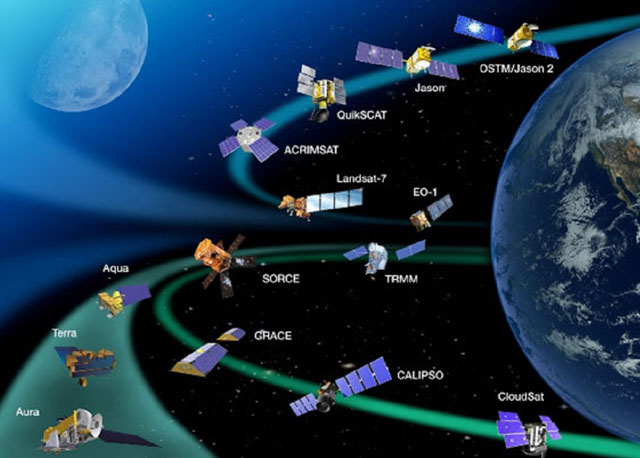
The Northern Corridor Regional Communication and Broadcasting Satellite Initiative (NCRCBSI) aims to reduce reliance on foreign satellites and help extend digital services to under-served areas.
As a next step for the NCRCBSI, the four countries agreed at the Connected Africa Summit in Nairobi to jointly fund a comprehensive feasibility study.
In a statement at the conclusion of the summit, Kenya’s cabinet secretary for information, communications and the digital economy, William Kabogo Gitau, said: “through this collaboration, we are strengthening regional cooperation and advancing the development of digital infrastructure to enhance connectivity, service delivery and economic growth across our countries.”
Still, the current levels of public spending are nowhere near sufficient to match the growing needs of Africa’s space economy or put it on a level footing with other economies worldwide that spend significantly more. Overall, governments globally spent $132bn on space in 2024, putting Africa’s share at less than 0.5% of global spending. Compared to around 65 satellites launched by African countries to date, 3,700 satellites were launched by US-based entities in 2025 alone, up from 2,300 in 2024.
Satellite infrastructure is costly and Africa still lacks the capacity to fund and develop most of it single-handedly, deepening its reliance on foreign partners and raising legitimate risks to its sovereignty. Indeed, no African nation currently possesses a rocket capable of sending satellites to space – all space programmes on the continent currently rely on partnerships with other nations to launch their satellites.
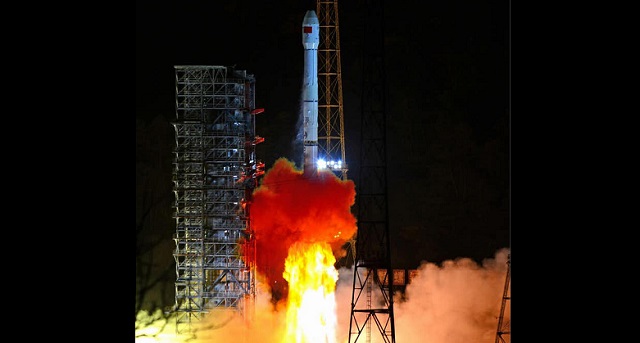
Algeria for example launched its latest satellite – ALSAT-3B – on 2 February 2026, from China’s Jiuquan Satellite Launch Centre, in partnership with the China National Space Administration (CNSA). Besides China, the United States and Russia are two other major funders of space programmes and initiatives in Africa.
Private investment hinges on sound policy
With fiscal space constrained, argues Patrick Masambu, senior advisor at Access Partnership and the former director-general of the International Telecommunications Satellite Organization, increased private investment will be needed to fund the next phase of growth of Africa’s space economy. However, sound policy frameworks precede and set the stage for the successful mobilisation of private investment, Masambu says.
“It is very important to note that public policy is what most investors will be looking at before deciding whether to participate in any ventures,” he tells African Business. “The private sector will be a growth engine, it will bring in the money, it will bring in the experience, but it is the policy that is in place that will ultimately govern how much growth you can have.”
African governments, he says, need to adopt a continental policy framework to attract private investment into the region’s space economy. He welcomes the creation of the African Union Space Agency (AfSA), which was established in 2025 to harmonise and standardise space policies and regulations across the continent.
“The creation of AfSA is a major step forward which will be helpful in growing Africa’s space economy, which must not be approached on an individual country basis,” Masambu notes.
He argues that the creation of AfSA will help reduce the challenges posed by fragmentation of the policy landscape. “If you have contradictory or isolated space laws from one country to another, you have different expectations. Then you end up with a fragmented space and scaling up can be difficult.”
He cautions that Africa’s policymakers must balance the need to attract private investment with the duty to safeguard the continent’s strategic interests.
“There are some things that are likely to happen if you don’t get policy and regulation right,” he says, citing the risk of technological dependency as a key risk to watch out for.
“If you don’t have policies in place that can encourage and enable sustainable development, then obviously there will be a tendency for dependency on technologies from outside the continent. That technological dependency can be a major issue, depending on what sector you are dealing with,” he adds.
Data and AI creating new opportunities
Although Africa’s space economy is growing at a healthy clip, much of it is still dominated by global tech giants and governments. Local industry participation remains limited and largely in lower value segments like component manufacturing, assembly and industrial services.
Masambu believes that this can change if local firms direct more of their attention to overlooked “low-cost, high-impact” opportunities. He points to data-processing for agriculture, mining and climate data as a promising area where African firms can thrive at relatively low costs.
“If you’re going to benefit from carbon deforestation information or carbon footprint markets, you need data. The same applies to agriculture; you need data on weather, you need data on soil.”
He argues these applications are “low-hanging fruits” for local entrepreneurs, given the relatively low cost of acquiring and processing this data from satellites.
Artificial intelligence (AI), he adds, is another critical driver of the sector’s growth that could create new opportunities for local firms. “There’s no way you are going to grow your space economy without having capacity in AI because it’s driving everything,” Masambu says.
AI’s ability to process large datasets and accelerate decision-making makes it a critical tool for scaling operations, he argues. “If you’re going to be effective, if you’re going to do things at scale, AI is a tool you need to take advantage of. Knowledge about it is key for the space sector.”
*****
Source: Africa.business