The Independent Uganda: You get the Truth we Pay the Price


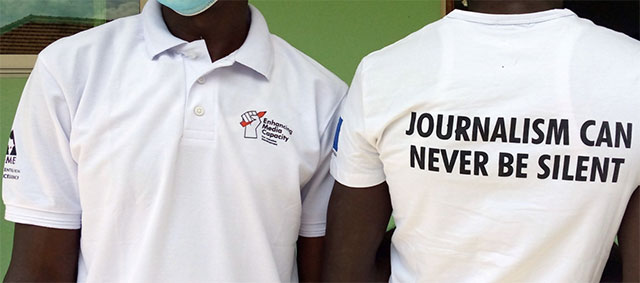
NEWS ANALYSIS | MAURICE ONIANG’O – GIJN | It all started in January of this year, just days before Uganda’s national elections. That’s when the Kampala-based African Centre for Media Excellence (ACME), a GIJN member, was among several civil society and human rights organizations that received a letter from the country’s National Bureau for NGOs ordering all of them to immediately cease operations. The agency claimed that ACME’s suspension was based on intelligence suggesting the group was involved in activities “prejudicial to the security and the laws of Uganda.” No further details were given. Nearly four months later, there have been no material developments in the investigation that the NGO Bureau promised into the allegations behind the suspension, according to ACME, even as it remains in contact with the regulator and its fate remains in limbo.
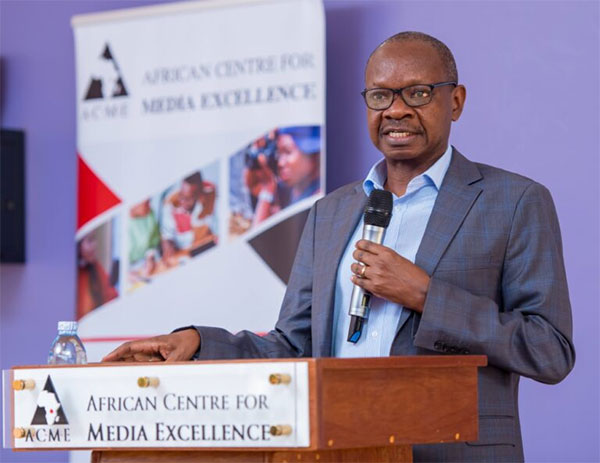
“There is a real danger,” said ACME Executive Director Dr. George Lugalambi, “that as the suspension drags on, our funding partners will say if these programs are not running, we have no reason to continue investing.” He paused. “That is an existential situation.” Lugalambi added that the organization had long worked closely with government agencies to strengthen reporting on different issues and to organize public dialogues around professionalization of journalism, among others, making the suspension even more difficult to reconcile with its track record.
The suspension also drew an immediate response from the Committee to Protect Journalists (CPJ), which monitors threats to press freedom worldwide. “The suspension of organizations like ACME, especially in the lead-up to elections, is deeply concerning,” said Angela Quintal, the Centre’s Africa regional director.
Quintal also warned that curtailing institutions that support journalism risks weakening independent oversight and limiting the public’s access to credible information, and said the move reflected a broader tightening of space for independent journalism in Uganda. As CPJ warned last month, that country’s government recently proposed — and has now passed — a “foreign agents” bill similar to other pieces of draconian legislation passed in Russia and central Asia, which includes punitive measures that effectively criminalize most kinds of accountability journalism.
Filling the Gap
Founded in Kampala in 2009, ACME occupies an essential position between journalism schools and newsrooms. Sixteen years ago, founders Peter Mwesige and Bernard Tabaire, then senior editors at Daily Monitor and journalism lecturers at Makerere University, both saw what graduates lacked and what newsrooms required. Budding young reporters would begin their careers with enthusiasm, but were under-equipped for the complexity of public affairs coverage, and editors were too overstretched to mentor them. Subject matter knowledge in areas like taxes, procurement, and law was thin. So they launched ACME to address it.
“The idea was that journalists needed to really master the subject matter they cover,” Lugalambi explained. “That is the foundation of whatever approach you take to reporting.” The organization was designed to close that gap through training, reporting grants, research, and advocacy. It has a lean team of 12 staff members and has trained hundreds of journalists across Uganda and sub-Saharan Africa.
ACME has also endeared itself to reporters in Uganda and beyond through its serialized “basket of story ideas” articles, which brimmed with potential investigative stories on offbeat reporting topics such as road and traffic management, examination results coverage, urban planning, land and property rights, local government accountability, and post-harvest handling of agricultural produce. They also produced several reporting guides anchored on localized experiences and resources.
The Centre’s research has also tracked a persistent weakness in the media landscape. “The proportion of investigative reporting, compared to straight news, remains disproportionately small,” Lugalambi noted. He described the model as intentionally systemic, with research informing training and awards reinforcing higher standards.
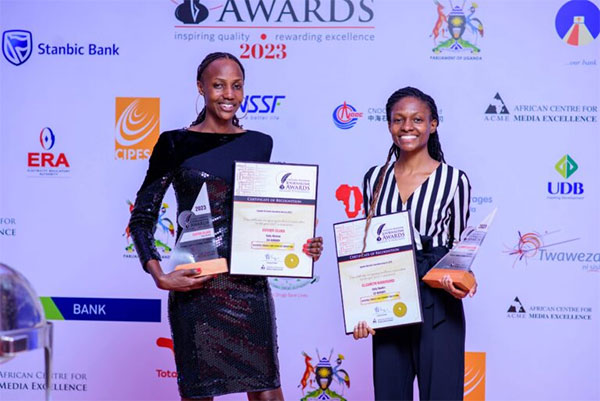
One of the clearest expressions of that approach is its annual Uganda National Journalism Awards, one of the country’s most respected recognition programs. Prof. Monica Chibita, a media scholar in Uganda, said the awards push journalists “to aspire to a higher standard,” creating a culture of excellence across newsrooms. The organization worked at every level of the media ecosystem. This systemic approach, she said, is what has made ACME indispensable.
Coaching, Training, Childcare
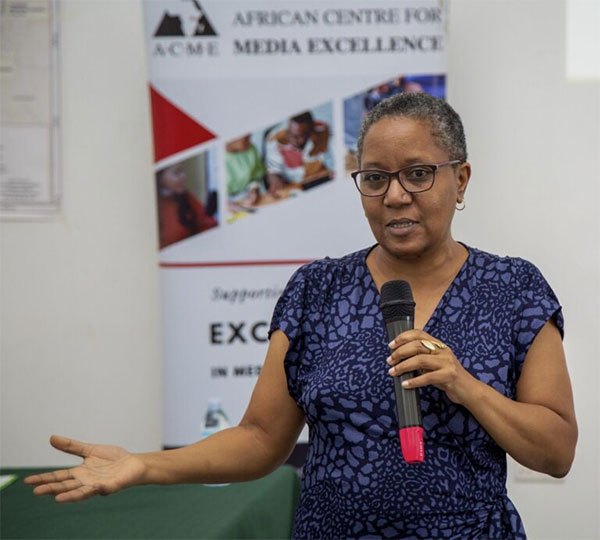
That system is most visible in the day-to-day work of training journalists. Rachel Mugarura-Mutana, ACME’s training program manager, has been with the organization since 2012, close enough to the founding to remember what it looked like before it had a track record. The skills gaps she encounters are often basic. Reporters struggle with forensic interviews, reading budgets, or audit reports, and building the hypothesis that holds an investigation together. “These are not taught in school,” she said, and added that few newsrooms have time to teach them.
A typical fellowship runs over three months, combining short training sessions with extended one-on-one coaching as journalists develop real stories toward publication. Class sizes are kept small, never more than 15. “It’s hard to do one-on-one support if there are more than that,” Mugarura-Mutana said, acknowledging that the approach does not always please funders who prefer to measure impact in volume. “Some want to train a hundred journalists. But to what end?”
Ronald Musoke was one such example of ACME’s longstanding impact. After an early oil and gas reporting fellowship, he returned to his job at Kampala’s The Independent and began reporting on Uganda’s emerging petroleum sector, including an investigation into the country’s complex oil development plans. Subsequent ACME training on diplomacy and foreign influence helped to inform a story of his on China’s growing footprint in Uganda.
“You will never leave an ACME training,” Musoke said, “without having delved into what investigative journalism actually demands.”
For women journalists, the program adds another layer. Women make up less than 5% of investigative reporters in Uganda, according to Mugarura-Mutana. The organization reserves places for women and provides childcare so nursing mothers can attend. “We recognize that their circumstances are different,” she said.
The organization has also had to help some women navigate the risks of investigative work. Some reporters have asked that their bylines be removed from sensitive stories. “We’re happy to do the work,” some journalists have told ACME trainers. “We just don’t want to be the face of it.”
The work does not stop with reporters. ACME has also invested in the editors who supervise them. “In many newsrooms in our region, there is no clear pathway for professionalizing editing,” Mugarura-Mutana said. Editors are often promoted from reporting roles without preparation for the leadership responsibilities the job requires.
ACME began designing programs specifically for editors, including field visits, learning exchanges and peer networks. The logic was simple. If reporters returned from training with new investigative skills but their editors did not understand the approach, the impact would be limited.
In recent years, the organization has experimented with an “editors-at-large” model, pairing journalists on complex investigations with senior editors who advise on sourcing, narrative structure and safety. The programs have also created a rare meeting ground in Uganda’s fragmented media industry, where journalists from competing outlets seldom share ideas, bringing them together “beyond competitive divides,” Dr. Lugalambi said.
It has also expanded its work beyond training. Its Election Promise Tracker, a digital platform that catalogues campaign pledges by presidential candidates and links them to verifiable source material. Designed as a reporting tool, it allows journalists to track commitments across sectors, compare positions and test whether political claims align with earlier statements. For Professor Monica Chibita, the initiative reflects the centre’s core mandate of “holding power accountable.” She described the tool as “very helpful,” and added that such tools give reporters the material to move beyond rhetoric and scrutinize power more systematically.
In newsrooms where reporters often move quickly between beats with little time for specialization, the organization has become one of the few places where journalists can pause, deepen their craft, and return better equipped to scrutinize power.
Shifting Landscape of Press Freedom
But carrying out this mission in Uganda now carries more risks. Authorities have grown increasingly sensitive to scrutiny, said Lugalambi, describing what he called a tendency “to securitize public discourse,” treating oversight as opposition and dissent as a threat.
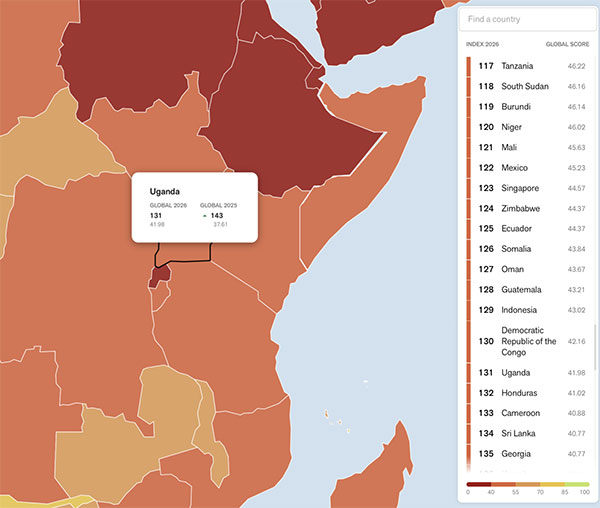
For instance, in the months leading up to the 2026 elections in Uganda, CPJ documented assaults, arrests, and harassment targeting journalists, along with episodes of censorship. The country’s press freedom environment remains in the “difficult” category in the 2026 World Press Freedom Index, ranking 131st out of 180.
The Centre has tried to navigate that environment by focusing on improving the quality of public-interest journalism. It has trained reporters not only in Kampala but also in provincial towns and has partnered with government agencies on programs covering extractive industries and public finance.
Suspension and Silence
Despite ACME’s careful approach, the practical damage of its ongoing suspension has been significant. Training cohorts planned for this year are frozen. It was unable to release the final edition of its monthly election media monitoring report, which it has published since 2015. The Uganda National Journalism Awards, uninterrupted since 2014 and widely regarded as one of the most rigorously run recognition programs in any profession in Uganda, are likewise suspended.
ACME’s executive director was candid about the current financial precarity of the organization. Much of the funding for investigative journalism in Uganda comes from time-bound international grants, which can falter or dry up when programs stall.
Chibita pointed out that the suspension’s ambiguity compounds its damage, creating a “chilling effect” in an already constrained media environment. “It creates an atmosphere of ‘damned if you do and damned if you don’t,’” she said. Because the centre has long been seen as a standard bearer, she added, action against it sends a signal to others to pull back. “You are bound to ask: ‘Will I be next?’” The result, she warned, is not only fewer training opportunities, but a decline in the quality and courage of reporting.
Notably, there has been pushback against the government’s actions, which have also affected three other media organizations, the African Institute for Investigative Journalism (AIIJ), Agora Centre for Research and the Human Rights Network for Journalists (HRNJ). In March, the Uganda Law Society took the Ugandan government to the East African Court of Justice over the indefinite suspension of NGOs, to show that the matter is being handled at a regional level. And a recent judicial ruling in the country in April called into question the government’s authority to summarily freeze any group’s finances under the banner of suspected money laundering.
While the case specifically concerned the Financial Intelligence Authority (FIA), ACME said the judgment established an important principle relevant to its own suspension. “Although the NGO Bureau’s decision — rather than the FIA’s — effectively froze ACME’s accounts after suspending our NGO permit on January 9, 2026, the court’s FIA ruling establishes a relevant principle for ACME and the affected NGOs,” Lugalambi said. “As a regulator, the NGO Bureau is equally required to follow due process as declared by the court.”
ACME said there have been no major developments in the investigation the NGO Bureau said it would conduct into the allegations that prompted the suspension. However, the organization says it has remained in regular contact with the Bureau’s leadership.
According to Lugalambi, the Bureau has, in some cases, responded to ACME’s requests, including granting the organization conditional access to its accounts so it can meet essential financial obligations such as contractual and statutory commitments while awaiting a final resolution on the suspension.
In the end, Mugarura-Mutana’s concern is less about the organization itself than about what the suspension signals to the journalists who have built their careers around it. “It tells our beneficiaries that nobody is untouchable,” she cautioned, and added that it sends a clear message to the press that authorities are watching.
CPJ sees a wider pattern. Quintal said the continued suspension suggests “a transition to a systemic dismantling of the infrastructure that supports independent journalism.” By targeting institutions that provide training and investigative grants, she said, the Ugandan government is weakening the foundations of public-interest reporting and replacing it with what she called “state-sanctioned narratives,” achieved not through direct censorship but through administrative pressure.
The centre said it is engaging with the NGO Bureau and expects eventually to be heard. “We are optimistic that ACME will survive beyond this,” Mugarura-Mutana said. “Maybe leaner, but no less bold.”
For journalists who built their careers inside ACME’s training rooms, the stakes are larger than the fate of one organization, especially if the suspension is not lifted soon. For Musoke, they extend beyond his own career, and to the next generation that he fears might be lost if ACME permanently disappears: “It’s the young journalists coming into the profession who would miss out terribly.”
****
SOURCE: GIJN
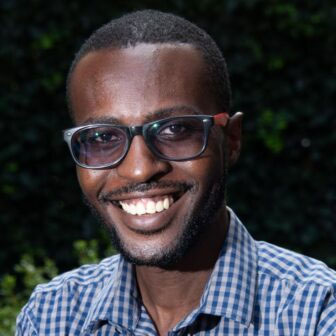 Maurice Oniang’o is a multimedia journalist who covers social justice, corruption, conservation, the state of the media, and press freedom. His work has appeared in National Geographic, the Guardian, The Continent, 100reporters, and Reuters Institute for the Study of Journalism, among others, and was the recipient of the Thomson Foundation Young Journalist of the Year award and multiple awards from the Media Council of Kenya. He holds a Master’s degree in journalism from Columbia Journalism School.