The Independent Uganda: You get the Truth we Pay the Price


The greatest risk is not in investing in Africa’s own potential, but in failing to do so
Kampala, Uganda | Julius Businge | A continental push is underway to harness Africa’s estimated $700bn in pension assets to fund crucial infrastructure and reduce reliance on foreign debt, senior officials said at the All Africa Pension Summit in Kampala.
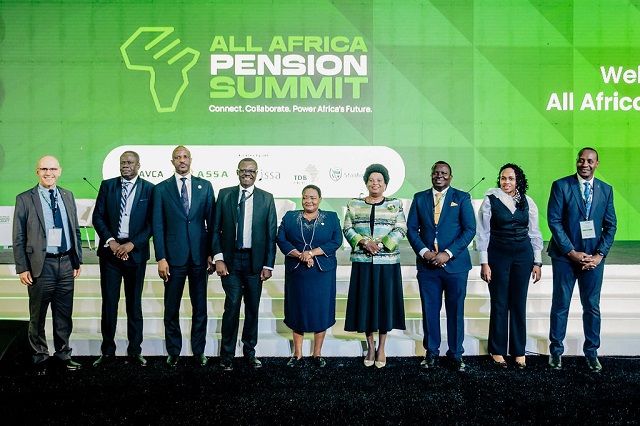
The summit, hosted by Uganda’s National Social Security Fund from November 5–7 under the theme “Unlocking Africa’s Pension Potential for Sustainable Development”, brought together ministers, regulators and institutional investors with a unified message: the long-term, domestic capital held in pension funds is ideally suited to bridge the continent’s vast financing gap.
Michael Atingi-Ego, Governor of the Bank of Uganda, set the tone in a keynote address, arguing that African nations must look inwards to power their economic development.
“The strategic use of pension capital is integral to Uganda’s Ten-Fold Growth Strategy,” he explained, emphasising that alignment with national development priorities and sound financial management — including controlled inflation and currency stability — are foundational to leveraging such investments.
He noted that these long-term, “patient” capital pools are ideally suited for investment in infrastructure — roads, dams, hospitals and schools — which, he said, are “critical” to economic growth.
He called for sector reforms and the creation of new investment instruments, such as green and infrastructure bonds, to facilitate pension funds’ participation.
The sentiment was echoed by Uganda’s Prime Minister, Robinah Nabbanja, who delivered the President’s message. She praised NSSF Uganda for its evolution into “an important contributor to national development.”
“The Fund is now a major investor in affordable housing, renewable energy, and other key sectors – a step in the right direction,” she said. “Our focus as a government is to mobilise and empower our population to make productive use of existing infrastructure, creating jobs, wealth and prosperity for individuals, families, and companies alike.”
She highlighted a central paradox for the resource-rich continent, adding: “Africa urgently needs both capital and entrepreneurship to accelerate development. Our pension funds present a unique opportunity to mobilise domestic capital for investment in critical sectors such as energy, infrastructure and transport.”
Rethink external borrowing
The warnings about the limitations of traditional development finance were stark.
Ramathan Ggoobi, Permanent Secretary and Secretary to the Treasury, urged African economies to rethink their dependence on external borrowing. He revealed that Uganda’s retirement benefits sector assets have grown to Shs 25.4 trillion (approximately $6.7bn), equivalent to 12 per cent of GDP.
“We must unlock and leverage the billions of shillings our citizens save each year.
Properly structured pension capital, coupled with insurance products, is the ideal instrument – domestic, long-term, and aligned with our national priorities,” he said.
Ggoobi pointed to a robust economic context, with Uganda’s economy growing at 6.3 per cent in FY 2024/25 and projected to expand by 7 per cent this fiscal year.
Betty Amongi, Minister of Gender, Labour and Social Development, challenged pension fund managers directly to move beyond custodial roles.
“The greatest risk, colleagues, is not in investing in Africa’s own potential, but in failing to do so. It is in allowing our capital to passively support economies that do not prioritise our people, while our own infrastructure crumbles and opportunities wither.”
Leonard Zulu, United Nations Resident Coordinator in Uganda, framed the imperative within broader global goals, affirming that pension capital must be embedded within frameworks such as the Sustainable Development Goals and Africa Agenda 2063.
“This Summit is more than a technical discussion. It is a forum for aligning policy, regulation, capital markets and project pipelines with the SDGs and the Africa Agenda 2063,” he said.
Throughout the discussions, a clear consensus emerged: pension funds represent enormous untapped potential to foster inclusive growth.
Moving forward
The challenge now, participants agreed, is to mobilise this domestic savings pool into action through aligned national strategies, regulatory reforms, and targeted investment instruments. By placing pension funds at the heart of the continent’s financing architecture, Africa may well begin to fund its own future rather than borrowing it.