The Independent Uganda: You get the Truth we Pay the Price


The 4th BNN Youth Summit concludes with strategic, bold asks to advance Africa Union Agenda 2063
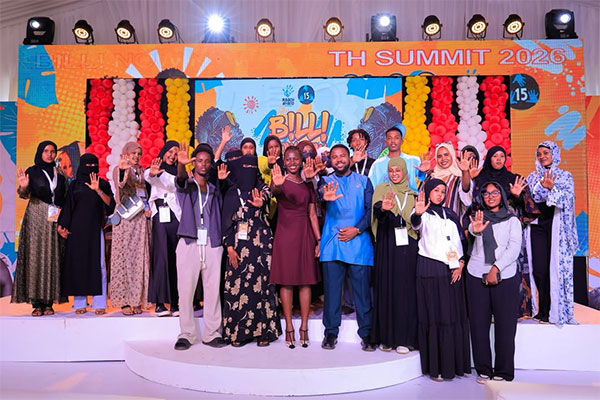
Kampala, Uganda | NEWS CORRESPONDENT | The Fourth B!LL Now Now (BNN) Youth Summit concluded in Kampala, Uganda, on 7th August with over 1,000 delegates from 11 African countries uniting to pursue African Union Agenda 2063 through established continental networks to foster policy change in their respective countries.
Held under the theme “Africa Recharged: Youth Power. Bold Voices. Real Change,” the three-day summit harvested three “Bold Asks” from the discussions, which included strategic funding, intentional inclusion, and guaranteed seats.
The summit was held from 5–7 August 2026 at Reach A Hand Africa’s headquarters on Lungujja Avenue, Kampala, and was convened by Reach A Hand Africa (RAHA) and Third Sector Builders as part of RAHA’s activities marking International Youth Day 2026.
The delegates also took part in a cultural tour of selected sites within the Buganda Kingdom to reinforce the importance of culture and identity in building a connected and integrated Africa.
The priorities named ‘Bold Asks’ made at the summit feed into Agenda 2063: The Africa We Want, the African Union’s 50-year strategic framework and blueprint for transforming the continent through inclusive growth, sustainable development and political unity.
Adopted in January 2015, Agenda 2063 places young people at the centre of Africa’s development agenda.
The framework responds to challenges affecting Africa’s young population, including unemployment, limited access to quality education and inadequate representation in leadership and decision-making.
Under Aspirations 1 and 6, it emphasises job creation, skills development in science and technology, and the empowerment of young people to harness Africa’s demographic dividend.
Discussions throughout the Summit centred around six priority areas: Sexual and Reproductive Health (SRH), Mental Health, Entrepreneurship and Trade, Education and
Skills, Climate and the Green Economy, and Responsible Technology and Artificial Intelligence (AI).
The discussions particularly speak to Aspirations 1 and 6 of Agenda 2063, which envision a prosperous Africa driven by inclusive growth and sustainable development, and a people-driven continent that harnesses the potential of its women and young people.
More issues
Representing South Sudan, youth advocate Esther Keji highlighted insecurity as one of the greatest barriers facing young people across her country.
She noted that conflict continues to disrupt education, livelihoods, and civic participation, calling for greater investment in peacebuilding and inclusive opportunities that enable young people to thrive.
In Uganda, Mukiibi Sharif from UNESCO’s O3 Plus Programme emphasised the importance of investing in young people’s creativity, innovation, and skills development to unlock opportunities within Africa’s growing creative and digital economies.
He called for stronger partnerships that connect young people to mentorship, financing, networks, and markets capable of transforming innovative ideas into sustainable solutions.
“When it comes to employment challenges facing young people in Somalia, factors such as limited access to education continue to affect opportunities, making it difficult for many young people to access formal employment,” said Farhiya Abdiqani from Somalia.
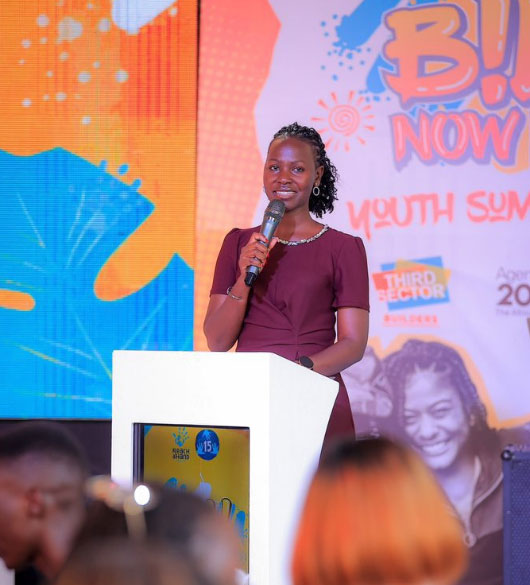
Uganda’s commitment
From Uganda, the host country, Dr Lakisa Mercy Faith, Minister of State for Gender, Labour and Social Development (Youth and Children Affairs), who delivered the keynote address, committed the Government to addressing the issues raised during the Summit.
“The Government of Uganda remains committed to creating an enabling environment where every young person has the opportunity to learn, innovate, work, lead and contribute to national development,” she said.
She added that through the Ministry, the Government continues to invest in programmes that strengthen youth participation, skills development, entrepreneurship and leadership.
“However, we also recognise that many young people continue to face significant barriers. Unemployment, inequality, mental health challenges, gender-based violence, limited access to quality education and healthcare, climate change, and the rapidly evolving digital landscape continue to affect the lives of millions of young Africans,” she said.
According to the African Union almost 60% of Africa’s population is under 25 and describes Africa as the world’s youngest continent.
Humphrey Nabimanya, Founder and CEO of Reach A Hand Africa commended the summit for being action-driven, unlike many engagements
“There are too many young people’s engagements which are symbolic in nature, but this year’s edition is meaningful because of its action-oriented approach” he said.
The Summit will convene in 2027 to track progress on the Bold Asks made.
The Bold Asks:
- Strategic funding:
Young people need access to strategic and sustainable funding if they are to move from ideas and potential to meaningful action. The Bold Ask goes beyond providing financial resources; it calls for greater access to policies, opportunities, networks and platforms that enable young people to turn their ideas into solutions and contribute meaningfully to Africa’s development.
- Intentional inclusion
Young people should not be included in development processes simply for representation or optics. Intentional inclusion means creating meaningful opportunities for young people to contribute to, influence and shape the conversations and decisions that affect their lives.
- Guaranteed seats
Young people should not only be invited to the table; they should have a meaningful place in the rooms where decisions are made. This Bold Ask calls for guaranteed spaces and opportunities for young people to participate in decision-making and access contracts that enable them to contribute their skills, ideas and solutions.
Strategic funding gives young people the resources and opportunities to act. Intentional inclusion gives them the space to influence the conversation, and guaranteed seats give them the authority and opportunity to participate in decision-making and implementation.
The summit also brought together policymakers, civil society organisations, development partners, innovators, and private sector leaders from Uganda, Kenya, South Sudan, Sudan, Burkina Faso, Somalia, Burundi, Tanzania, Eritrea, Ethiopia, and the Democratic Republic of Congo.
Rasheed Mutaha, the BNN Coordinator in Kenya and Strategy, Markets and Movements Growth Lead at Development Dynamics, said the Bold Asks would be monitored annually to assess progress towards achieving the aspirations of Agenda 2063.
“Sometimes young people ask for pizza, but they are given chapati,” Mutaha remarked, underscoring the importance of listening to young people and designing interventions that respond to their actual priorities and needs.