The Independent Uganda: You get the Truth we Pay the Price



SPECIAL REPORT | ANTHONY NATIF | As recorded in court, in the case Uganda Vs Molly Katanga and adapted from @TonyNatif on X.
****
Prosecution Witness 24: Evidence-In-Chief
Led by: Assistant DPP, Samali Wakooli
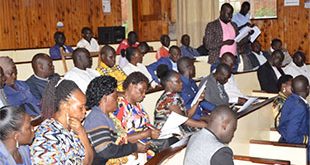
10:03 am: Judge Rosette Comfort Kania walks in; with her usual assured look. Everyone stands and bows. She bows back and then says to Jet Tumwebaze who had missed one court session: “Jet, I thought you’d abandoned this case.”
Court laughs.
Samali Wakooli: If it may please you my Lord, appearance is as before.
On watching brief is Ms Ivy Muhumuza
This matter comes up for further hearing and we are ready to proceed with PW24.
A gentleman, hitherto seated near the front of the courtroom, steps up and walks to the dock.
He’s a lean man, of average height. He’s wearing a tan suit, white shirt and brown tie. He looks calm, his piercing stare difficult to miss.
Wakooli immediately shoots: What religion are you?
PW24: My Lord, I’m a Protestant.
Judge: Your name?
PW24: Number 30844, Detective Sergeant Beteise David (DB)
DB: I swear by the almighty God that the evidence I shall give now, touching the matter before court, shall be the truth, the whole truth and nothing but the truth.
Wakooli: Can you repeat your particulars for the court?
DB again tells the court his force number and name.
He is attached to Jinja Road Police Station, in the Criminal Investigations Directorate under Homicide Desk. He was the Investigating Officer (IO) in this case.
His roles as IO entail:
Investigating homicide cases, interviewing suspects, conducting searches, arrests, compiling files and sending them to the DPP And bringing suspects to court; plus testifying in court.
He has been in Police for 31 years.
He said that on 2/Nov/2023, the day of Mr Henry Katanga’s death, he was at Kinawataka on other duties with then Jinja Road OC-CID, Bibiana Akong, who received a call informing her of a case of alleged suicide by shooting in the Mbuya area. The call came in at around 10 am.
They proceeded to the Katanga residence on Plot 50 Chwa II road in Mbuya.
The team was led by Bibiana and had D-Corporal Tonny Oryokot, Constable Owinyi and other uniformed police officers. SOCO AIP Emmanuel Olugu (PW20 in this case) was also part of the team.
They found ASP Ogwang, the then OC Bugolobi Police Station together with AIP Musede and another female crime intelligence officer attached to Bugolobi.
When they reached the residence, Ogwang briefed them that he had received a call from Charles Otai (A4) informing him of a case of suicide by shooting, which he responded to.
DB said that “upon reaching the scene, the facts weren’t revealing suicide, they were instead revealing murder”. Mr Beteise didn’t give any reasons for this.
Ogwang and Musede made a decision to cordon off the scene. He then said that Musede who was at the main entrance of the house preserved the scene.
Ogwang then led them to Patricia (A2) who led them to George Amanyire (A5) who in turn led them to Charles Otai (A4).
Charles introduced himself as a family doctor and led them to what DB called “the seat of the crime” on the first floor of the house.
Upon reaching the 1st floor, they found the master bedroom closed but with a key in the lock.
Otai opened the door and the SOCO, Olugu entered and made a walk through while DB remained at the open door.
The SOCO took photos of the scene as he found it, he made some photo identifiers and placed them on key exhibits he had identified.
****
Karuhanga: My Lord, is he telling us what someone else did?
DB: “I was there when he was doing this.” ….“He again photographed when I was seeing.”
When SOCO was done with his photography, Bibiana, Beteise, Oryokot, Owinyi entered and also had a walk through
Wakooli: where was Otai?
DB: We were with Otai, we entered with him.
At this point Assistant DPP Wakooli then calls for translation (which she called “the interpretation”).
The Rutoro lady does her thing
Wakooli to PW24: So, upon entering this room, what did you observe?
DB: My Lord, when I entered the room, I saw what looked like a human body lying on a mattress, covered with a bed cover.
The mattress had been placed on the ground with what looked like the structure of a body lying on it.
The master bed had a pool of blood and on the bed was a pistol, a cartridge, a live ammunition and a projectile.
Wakooli: Did you establish how (the body) came to be on the ground?
DB: My Lord, I later established that it was a dead body of a male adult who was identified by Charles Otai as Henry Katanga. When I inquired from Otai how the body came to be lying on the ground, he told me it was lifted from its position on the master bed by him (Otai) and George Amanyire (A5).
SW: What was its original place?
DB: The original place, my Lord was on the master bed.
SW: You also talked about seeing the live ammunition, pistol, a projectile that were on the bed. Did you establish how they came to be on the bed?
DB: My Lord, upon interviewing Otai and Amanyire, the one ammunition, the one cartridge and projectile were found by George Amanyire when he was mopping the room. He inquired from Martha and Patricia as to where to put them.
Apparently they told him to put these items on the bed.
SW: what about the pistol?
DB: According to Otai, the pistol had been taken away by Patricia and Otai asked that she brings it back to where it was, which she did.
SW: what else did you observe on the body?
DB: My Lord, upon uncovering the body, by the SOCO, Olugu, I observed that the body was tied straight by use of a gauze, with arms parallel to the body. The legs were also tied together by a gauze and there was another gauze tied to the head from under the chin up to the top of the head.
SW: Did you establish who had done the tying of this body?
DB: My Lord, according to Charles Otai, he’s the one who tied it. He is also the one who cleaned it.
SW: how did you establish that the body had been cleaned?
DB: My Lord, when you see the pool of blood which was on the bed from which the body was removed, that body would’ve been covered in a pool of blood but in this case, it had no blood apart from the wounds which had dried and the cotton and gauze tied on the wounds.
SW: what else did you observe on this head apart the gauze that you’ve described?
DB: we wanted to see the nature of injuries on the body; so the SOCO removed the gauze and we saw two wounds; one slightly above the ear on the left and one was through the right ear.
SW: what did you make of those injuries?
DB: my Lord, the two wounds were bullet wounds. When I looked at them, the one which was on the left was an entry hole, the one in the right ear was an exit wound where the bullet exited from.
SW: how did you come to the conclusion that the one on the left was the entry and the one on the right was the exit?
DB: My Lord, according to bullet wounds, the entry wound is usually smaller than the exit wound. Secondly, the entry wound has tissues that protrude inwards and the exit wound has tissues protruding outwards and it’s always larger than the entry wound.
SW: Anything else that would have guided you?
DB: My Lord, this body had no other wound. There were only two wounds.
SW: Okay, what else did you observe?
DB: My Lord when we entered that room, on the floor, there was a sign of mopping and some blood splashes on the curtains, walls and ceiling. There were also blood smears on the wall, near the door to the master bedroom and on the door handle.
SW: you said that on the floor, you saw signs of mopping. Did you establish who was doing the mopping?
DB:Amanyire George. I established this information by interviewing him.
SW: what did you observe in the bathroom?
DB: it was a bit wet with water mixed with blood. There was a bucket with water mixed with blood. There was a rag with a handle which also had some blood, the toilet had water mixed with blood..
SW to DB: how was this broom?
DB: it was cotton, threadlike, with a handle.
SW: how did the room look like to you?
DB: Apart from signs of mopping, it was well arranged. Things weren’t scattered. It was arranged.
SW: what else do you see, still in the room?
DB: there was a sales agreement for a house. It was on the table and it had been signed by A1. The part where the deceased was supposed to sign was vacant.
SW: and why were you interested in this agreement?
DB: My Lord, when we looked at this agreement, we thought that maybe this agreement had triggered the misunderstandings which were in the room. The agreement was recovered and exhibited. It was recovered by AIP Olugu, the SOCO.
SW: Upon looking at this scene, what did you make of it?
DB: upon looking at the scene, the alleged case of suicide was ruled out.
Kabega stands up and takes a mic: My Lord I wish to object to that piece of evidence. This witness is a witness of fact and not opinion. He’s not here to give us his opinions.
SW: My Lord, this witness is an investigator and as an investigator, he’s allowed to give us his inferences from the observations he’s making that would guide him on the course of investigations…
The Judge rules for the prosecution on this objection.
Soon after, the witness starts talking bullet entry and exit wounds and Karuhanga stands up to object on the ground that this witness is not an expert in this field. The prosecution leans on the witness’ 27 years in homicide to say he has this experience. Mr Karuhanga asks that this be put on the record. (See video in frame 1 for this part).
Editorial Note: You might recall that “entry and exit wound” has been a serious point of contention in this case, with the prosecution saying that the bullet that ended the life of Mr Katanga went from left to right and he couldn’t have shot himself that way because he was right handed.
The postmortem stated as much.
The defense, citing bullet wound literature challenged the pathologist, to the point of him losing his cool. Then presiding Judge, Isaac Muwata did admit this literature.
Later on, the defense got PW23 and even PW24 (in cross) to admit that the side that the projectile should have exited Mr Katanga’s body had it followed the route advanced by the state wasn’t plausible because there was no bullet mark anywhere on that side of Mr Katanga’s body and this mark was instead on the left side, indicating that indeed the bullet went from right to left as the defense and the literature they presented suggests.
It remains to be seen as to how Justice Rosette Comfort Kania will resolve this impasse.
UgandaVsMollyKatanga
Date: 10/Nov/2025
Prosecution Witness 24: Evidence-In-Chief
Led by: Assistant DPP, Samali Wakooli10:03 am: Judge Rosette Comfort Kania walks in; with her usual assured look.
Everyone stands and bows. She bows back and then says to Mr @jet_tumwebaze who… https://t.co/DX1cpl7AOL pic.twitter.com/gvUlNU37aN
— Anthony Natif (@TonyNatif) November 17, 2025
SW: Mr Beteise let’s continue; what followed next when you decide that now this is a murder?
DB: we decided to involve other stakeholders but before we invited them, we interviewed Otai Charles. While still in the room, Ms Bibiana asked Otai to tell them if the room had a third party because according to them, it appeared so.
JET Tumwebaze : My Lord this witness is telling us about a conversation between Otai and Bibiana. Bibiana already told us her side.
Muwaganya: so you don’t want this witness to testify?
Jet: Let me finish. My Lord You had guided…..These conversations of this the other, the other, what do we do with them? One witness came and told us another version. You had guided that the witness limit themselves to what the person told them and not what the person said to another person while they were eavesdropping.
The Judge guides that since DB was in the room while the conversation between Otai and Bibiana allegedly went on, he may testify to it.
DB tells a story about how Otai was called by Patricia and when he showed up, he found Mrs Katanga lying down,unconscious. Mr Katanga was on the bed, dead.
Otai and Patricia took her to a Bugolobi Medical Center, where she was given first aid and referred to IHK
SW: what else did Otai tell you he had done?
DB: actually, much of what Otai did was change the body from where it was, putting it on the mattress, tying it and covering it.
SW: okay, who else did you interview?
DB: I interviewed Amanyire.
SW: Did you also record his statement?
DB: I recorded Amanyire’s statement, my Lord.
SW: and when you interviewed Amanyire, what did he tell you?
DB: Amanyire told me, he got up at around 6 (am); he moved out to wash the car of the master (the late Henry Katanga), which was packed in the yard. As he was washing the car, he heard something like a scuffle. He went running and informed the chef, Nuwareba. He asked him if he (the chef) was hearing people fighting. He answered that he was hearing a scuffle but he thought it was from the neighborhood. Amanyire told him it was from their master’s house.
He continued upstairs and called the girl who was in the house and together they moved to the Katangas’ bedroom. They found it locked from inside.
They knocked but the door remained locked so they called Martha (on phone), a daughter to the Katangas. They moved to the ground floor to make more calls.
Amanyire told DB that before going downstairs, he heard a sound that he thought was a water jar falling down.
While downstairs, he heard Mrs Katanga calling him. When he went back upstairs, he found she had moved from the master bedroom to the bathroom of another room. Within a short time, the daughters Martha and Patricia arrived.
Amanyire then assisted in carrying A1 (Mrs Katanga) to the yard where a vehicle was parked. A1 was driven away by Patricia to the hospital.
Amanyire came back upstairs where Martha told him to get a bucket, a rug and start mopping. That was outside the master bedroom, the area which stretches from the master bedroom to the other room.
SW: what about the master bedroom?
DB: The master bedroom my Lord, was locked.
SW: who had locked it?
DB: according to him, it had been locked by Martha. As he was cleaning, he felt concerned about his master and called his phone. It wasn’t answered after several attempts.
Martha then came and told him to stop calling the phone but instead continue cleaning.
He cleaned and finished the upper middle part.
SW: what followed?
DB: After this, Patricia returned and her, Martha and Otai entered the master bedroom.
Patricia told him to go bring a mattress (on which the late Katanga’s body was put). Martha and Patricia then told him to clean the master bedroom.
As he was cleaning the master bedroom, a police officer came and stopped him. He asked him to get out of the bedroom.
DB: My Lord, that’s where it ends.
SW: Let’s have the translation.
After the translation, Samali Wakooli asks DB to point out the different accused persons and name them. He does that. Says he has never interacted with A1.
Asked by the Judge how he identifies A1, he says he only saw her when she was taken to court.
SW: After you were done with these interviews, what happened next?
DB: My Lord after we were done with the seat, I was assigned (the responsibility) of accompanying the body to Mulago KCCA mortuary.
SW: who took the body from the scene?
DB: A-Plus Funeral Service Van
SW: who called A-Plus?
DB: Otai Charles, upon Patricia’s request.
SW: Apart from escorting the body, what other role did you play?
DB: when I reached the mortuary, I filled out police form 48A, which is a request for postmortem. I handed it to the mortuary registration.
When time for the PM came, I was called in and attended the postmortem, my Lord. It was done in my presence.
SW: who else was there?
DB: I was with Dr Ambayo and another Doctor; the mortuary SOCO called Penyuthi and other mortuary attendants.
During the PM, I requested for some samples for toxicology and I requested for some swabs.
The samples, including: liver, kidney, vitreous humor, urine, blood, stomach contents and wound swabs were packed by the SOCO.
SW: what did you do with these samples?
DB: I filled police form 17A and took some of the samples to Analytical (DGAL) for analysis.
I remained with other samples which I took to the SOCO of Jinja road; which were meant for comparison with other exhibits which we already had with the SOCO.
My Lord, the ones I took to DGAL, I put them on PF17A.
SW: Requesting for PID39 and as she’s tracing for it…she looks towards her colleague Jonathan Muwaganya….then asks DB: “what about nail clippings?”
DB: My Lord, I did not receive nail clippings.
They get into why he didn’t get them. He seems to be allover the map. (See video in frame 2)
Quickly, the conversation shifts to an explanation on why power went off at the Katanga residence for a few minutes in the morning of 2/11/2023. CCTV cameras weren’t run on backup so they also went off.
Editorial note: The defense had earlier in this trial brought a UMEME statement and letter that showed that indeed the units were out at the time but Patricia loaded and power was restored. They also pointed to a UMEME message in the digital forensic analyst’s report to back it up.
Court orders are discussed and soon after, the Rutoro translation is done.
Assistant DPP Samali Wakooli then stands up and says: “my Lord, that is all we have for this witness.
He’s now available for cross examination.”
She takes a slight bow and takes her seat between her two colleagues.
Defense Attorney, Mr MacDusman Kabega stands up, steadies himself as Mr Karuhanga passes him the microphone. He rubs his hands as if in glee, clears his throat and goes to work….