The Independent Uganda: You get the Truth we Pay the Price


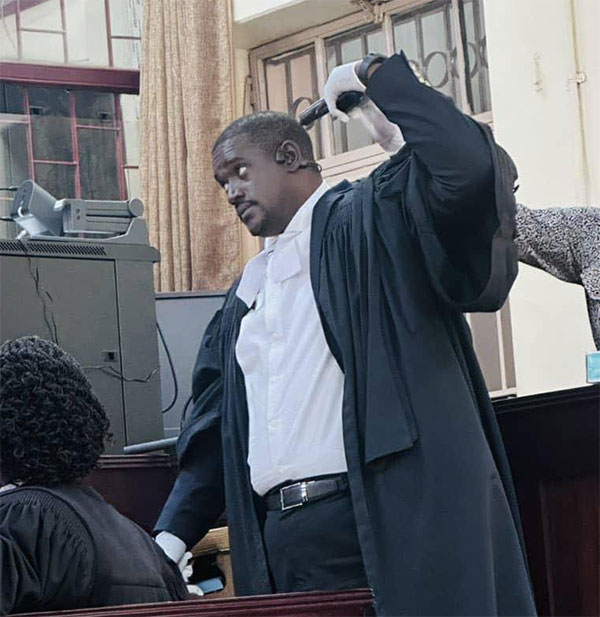
SPECIAL REPORT | ANTHONY NATIF | As recorded in the case Uganda Vs Molly Katanga and adapted from @TonyNatif on X. This is the first of several series on the case ahead of February 19th, when Justice Kania is expected to rule on whether the prosecution has established a prima facie case.
****
No Case to Answer?
“We submit that no reasonable tribunal properly directing its mind to the law and to the evidence adduced can convict any of the accused persons.
My Lord, we respectfully submit that if the accused elected to keep quiet, there is not sufficient evidence to warrant a conviction.”
Thus started the defense team’s rejoinder—at the no case to answer stage—in a murder trial that has taken more than two years in the High Court of Uganda, serving up surprises, anguish, pain, and courtroom drama that couldn’t look out of place in a Hollywood legal drama.
In a criminal trial that has captured national attention more than any other in at least a decade, the stakes couldn’t be higher.
The responsibility now lies squarely on the broad shoulders of Lady Justice Rosette Comfort Kania to decide whether Mrs Molly Katanga, accused of murdering her late husband, Henry Katanga and her 4 co-accused—including her two daughters—actually have any case to answer.
In blistering defense submissions filed on 22/Dec/2025 by two sets of lawyers from KAA Advocates and Tumusiime, Kabega & Co Advocates, the defense invited Justice Kania to rely on a Supreme Court decision in Fred Sabhashi v. Uganda (Criminal Appeal No.8 of 1990) to find that the prosecution case woefully fell short of the standard for establishing whether accused persons have a case to answer.
That decision cited a famous 1957 decision, Bhatt v. Republic, which laid down two rules in determining there’s no case to answer:
1- Where there’s no evidence to prove an essential ingredient of a case
2- The evidence adduced has been so discredited by cross-examination or is so manifestly unreliable that no reasonable tribunal could convict upon it.
Relying on those two rules and weighing them against the ingredients of murder, the defense called the state’s case absurd.
They said the state was inviting the court to speculate; basically, get into the legal weeds and fish out a conviction based off of conjecture, broken chains of evidence, discredited witnesses, phantom GSR swabs and police witnesses who can’t provide proof of presence at the investigation scenes they say they went to.
They told the Lady Justice that of the 4 ingredients of murder, the prosecution had only proved one: that a human being, Henry Katanga died.
They say that of the 25 state witnesses, none directly implicated Mrs Katanga; the state led no evidence of homicide instead advancing theories that they say the state’s own physical evidence disputes.
They questioned the state’s reliance on DNA evidence, yet their own witness, PW 8, was unequivocal in his views that his evidence wasn’t proof that Mrs Katanga shot the firearm. Ditto the GSR expert and the ballistics expert.
They further said the state relied on non-existent swabs to do the most critical of analysis, basically accusing the state of seeking to rely on manufactured evidence to secure a conviction.
They pointed out that state witness Aisha Birungi, who collected swabs from their client, said she got 4 swabs, which the state says they fully used in DNA analysis. A question arose as to what swabs the GSR expert then used to do his tests. No answers were offered.
The prosecution on their part invited the judge to find that “the death of Mr Katanga was unlawful as there’s no evidence whatsoever that has been advanced to show that the same was accidental or authorized by law”.
Invoking the “unique and peculiar” nature of the case, they told the judge that they’d had to rely on circumstantial evidence because “the crime was committed behind closed doors”. They called it “the best evidence”.
They prayed that the Judge relies on the “doctrine of last seen” to infer guilt on Mrs Katanga because she went to bed that night with her hubby. They further seek to rely on DNA evidence on the gun, GSR and Mrs Katanga’s conduct in the weeks following Mr Katanga’s death.