The Independent Uganda: You get the Truth we Pay the Price


Ntoroko, Uganda | URN | Environmental experts and local leaders in Ntoroko District have intensified calls for communities to protect water catchment areas amid growing concerns over declining water quality and shrinking water levels in rivers and streams.
The appeal was made during a community sensitisation meeting held at Karugutu Town Council headquarters. The meeting, organised by the Ministry of Water and Environment, aimed to promote proper management and protection of water sources.
Jeremiah Munubi, the Ntoroko District Environmental Officer, warned that destructive human activities such as bush burning, wetland encroachment, and poor farming practices are degrading catchment areas and threatening the sustainability of water resources.
Munubi explained that these activities destroy vegetation cover, leading to contamination of water sources and disruption of ecosystems that support water recharge. He urged residents to embrace tree planting, noting that forests and vegetation play a vital role in conserving the environment and safeguarding water sources. He emphasised that restoring catchment areas through afforestation and responsible land use is critical to ensuring a sustainable water supply in the district.
Gilbert Byamugisha, Manager of the Midwestern Umbrella for Water and Sanitation, said the sensitisation campaign is intended to raise community awareness on proper environmental management to address challenges affecting water supply.
Byamugisha revealed that water service providers in the district face serious challenges with water quality, particularly during the rainy season, when runoff carries soil and silt into rivers.
This makes water treatment more difficult before it is supplied for domestic use. He advised farmers to adopt improved agricultural practices, including avoiding cultivation along riverbanks and practising terracing in hilly areas to control soil erosion.
Dr Brian Guma Emmanuel, the team Leader of the Albert Water Management Zone at the Ministry of Water and Environment, identified siltation as one of the major threats to water resources in Ntoroko District. He noted that the ministry has developed a catchment management plan for the River Semliki aimed at restoring and protecting water systems.
The plan includes demarcating more than one kilometre of the river, re-vegetating a 100-metre buffer zone along the riverbanks, and conducting continuous community sensitisation on environmental conservation. Dr Guma added that Ntoroko experiences extreme weather patterns, with severe water shortages during dry seasons and flooding during rainy periods, both of which negatively affect water quality and availability.
Raphael Maate, the LC III Chairperson of Karugutu Town Council, stressed that water and sanitation are closely linked, urging residents to take an active role in protecting water sources to ensure a reliable supply.
Maate expressed concern over declining water levels in rivers and streams, noting that water bodies which were once impassable without bridges have significantly shrunk, allowing even children to walk across them. He also raised concerns about the destruction of water infrastructure, revealing that some residents cut water pipes during cultivation or in attempts to illegally access water.
Residents echoed the call for collective responsibility in safeguarding water resources. Sarah Mawazo emphasised the importance of maintaining hygiene in water harvesting containers such as jerry cans and tanks to ensure safe water for domestic use. Jane Kiiza urged farmers in hilly areas to adopt soil conservation practices to prevent erosion, which contributes to sedimentation in water sources.
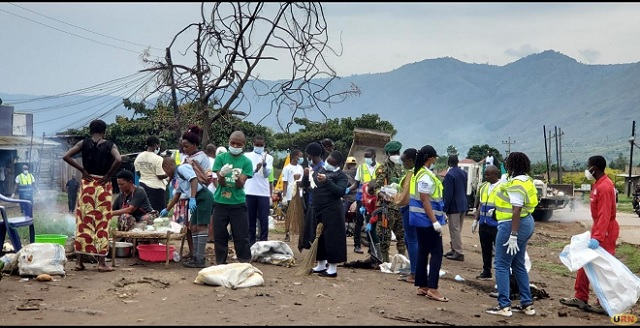
The sensitisation meeting was held under the theme “Creating Awareness on Catchment and Source Area Protection” and included a clean-up exercise within Karugutu Town Council as part of ongoing efforts to promote environmental conservation.