 The Independent Uganda: You get the Truth we Pay the Price


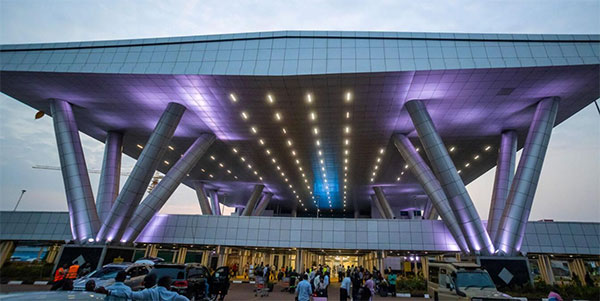
Uganda’s aviation sector eyes tripling passenger capacity, 300+ million liters of sustainable fuel potential, and 64 global air service pacts to propel economic ascent by 2030
Kampala, Uganda | JULIUS BUSINGE | Uganda’s aviation industry is charting an ambitious growth path, underpinned by major infrastructure upgrades, strategic international partnerships, and a strong commitment to sustainable and safe air transport.
The outlook was shared during the annual Stakeholders’ Engagement Breakfast hosted by the Uganda Civil Aviation Authority (UCAA) at Imperial Royale Hotel in Kampala on Dec.16.
In a keynote address delivered by former Deputy Chief Justice Steven Kavuma, representing the Minister of State for Transport, Fred Byamukama, the government reaffirmed its support for the sector, highlighting its critical role in driving tourism, trade, and socio-economic development.
Uganda’s aviation sector is experiencing strong recovery and expansion. International passenger traffic at Entebbe International Airport from January to November 2025 reached 2.247 million, already surpassing the full-year 2024 total of 2.243 million. Cargo volumes for the same period matched the entirety of 2024.
“The January to November 2025 traffic has already surpassed the entire 2024 traffic even before adding the busy December,” noted UCAA Director General Fred K. Bamwesigye in his presentation. He attributed the growth to new routes launched by Uganda Airlines to London Gatwick, Harare, and Kinshasa, alongside new entrants such as Flynas, Fanjet Express, Malawi Airlines, and Safarilink.
Widened connectivity
Uganda has also expanded its global connectivity through Bilateral Air Service Agreements (BASAs), now holding agreements with 64 countries. Recent signings include Qatar, the Central African Republic, Latvia, and Ethiopia.
A major highlight is the soon-to-be-opened 20,000-square-meter Passenger Terminal Building at Entebbe International Airport, featuring five aerobridges, 24 new check-in counters, and 14 self-check-in kiosks. The facility will increase annual passenger capacity from 2 million to 3.5 million when opened in phases from January 2026.
Beyond Entebbe, the government is fast-tracking airport upgrades across the country to support tourism and regional connectivity. Key projects include the development of Kabalega International Airport in Hoima, Kidepo International Airport in Karamoja, and the elevation of Arua, Kasese, and Gulu airports to international status. Gulu’s upgrade is being accelerated to facilitate Uganda’s hosting of the Africa Cup of Nations in 2027.
In line with global aviation’s push toward decarbonization, Uganda is positioning itself as a regional leader in sustainable aviation. The country voluntarily joined ICAO’s Carbon Offsetting and Reduction Scheme for International Aviation (CORSIA) in 2019 and recently completed a feasibility study on Sustainable Aviation Fuel (SAF) production.
“The study confirms that Uganda has significant potential to produce SAF using its rich biomass resources,” Bamwesigye stated. The program now moves to developing a national business case, with estimated production potential of 300–850 million liters annually.
Uganda’s election to the ICAO Council for the 2025–2028 term with 155 votes reflects its growing influence in global aviation governance. “Uganda is honoured to take up this responsibility and to contribute to advancing safe, secure, and sustainable air transport globally,” Bamwesigye said.
The sector is also advancing institutional reforms, with a roadmap now in place to separate regulatory functions from airport and air navigation service provision—a move aimed at enhancing efficiency, eliminating conflicts of interest, and aligning with international best practices.
Inadequate funding
Despite progress, challenges remain, including inadequate funding for upcountry aerodromes, land constraints at Entebbe, and growing government debt to UCAA, which stood at UGX 166.6 billion as of June 2025.
Looking ahead, Uganda plans to host major international aviation events, including the IFATCA Conference and AATO meeting in 2027, and will launch a reviewed 20-year Master Plan for Entebbe International Airport in 2026.
In his remarks delivered by Justice Kavuma, Minister Byamukama urged stakeholders to maintain high service standards. “As the Authority prepares to open the new terminal, I urge all service providers to ensure that the services they render to passengers match the revamped infrastructure.”
With sustained investment, clear regulatory vision, and a commitment to sustainability, Uganda’s aviation sector is poised to become a key engine for national and regional growth in the coming decade.



Thank you for the updates ☺️