The Independent Uganda: You get the Truth we Pay the Price


Kampala, Uganda | THE INDEPENDENT | Uganda has jumped into the 3rd position in the Absa Africa Financial Markets Index (AFMI), a leap from the 4th position in 2024. The index evaluates 28 countries, looking at factors such as market depth, access to foreign exchange, and macroeconomic stability.
According to AFMI 2025, Uganda scored 66 points, behind only South Africa (86) and Mauritius (76). The country’s strengths include its macroeconomic environment, where it scored an impressive 87 points. This, officials said, is thanks to falling inflation and improved non-performing loans – a big win for the economy.
Uganda’s also doing well in market transparency, with a score of 76. The government has been upgrading central securities depositories, which is enhancing settlement and liquidity. And, in terms of legal standards, Uganda is in fifth place with 85 points, with efforts underway to improve the legal framework.
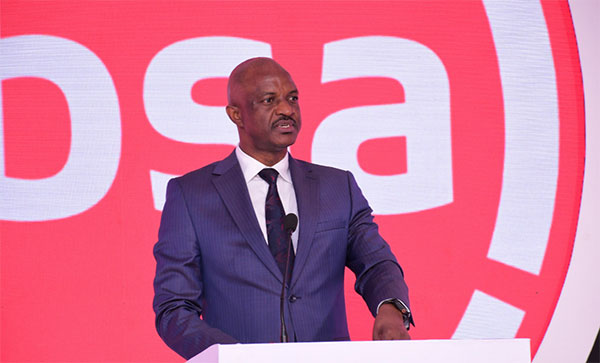
Speaking during the 2025 Absa AFMI and Economic Forum, the Permanent Secretary and Secretary to the Treasury, Ramathan Ggoobi, attributed Uganda’s success to deliberate government efforts. “We are re-growing in an election year, which isn’t easy,” he said. “This performance shows our prudent macroeconomic management and sustained reforms are paying off.” He highlighted the stable Ugandan shilling, growing exports (now at $13.4 billion), and rising foreign investments.
He said that sustained growth must be matched with deeper, more inclusive capital markets, commending the regulators and market institutions for Uganda’s strong performance.
Ggoobi emphasised that the next phase of progress requires deliberate action to deepen markets. He highlighted key priorities such as rebuilding capital markets that provide long-term debt and equity financing, attracting venture capital that supports higher-risk innovation with lower collateral requirements, and exploring the establishment of an SME-focused stock exchange to support firms that do not yet meet main-board listing criteria.
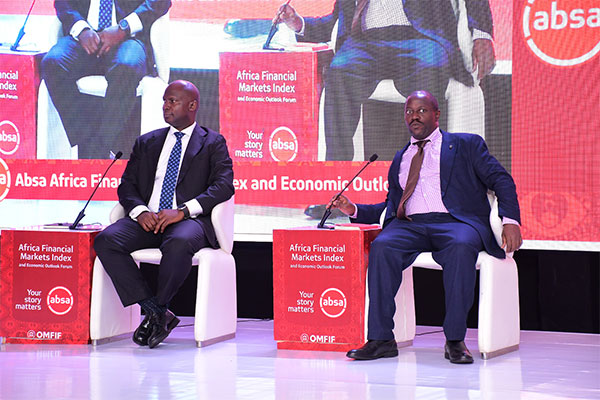
The Governor of the Bank of Uganda, Michael Atingi-Ego, noted that. “ Our biggest constraint today is not regulatory sophistication; it is capital mobilization and market depth.
He explained that the Central Bank’s 2022–2027 strategic targets include a financial inclusion index of 75%, an e-payments index of 46%, and continued progress in financial market development, with some market targets already surpassed.
“The recent gains have been supported by reforms across core market infrastructure, including the deepening of REPO and money markets, and emphasized that these achievements reflect collective effort across government, regulators, Parliament and market participants.”
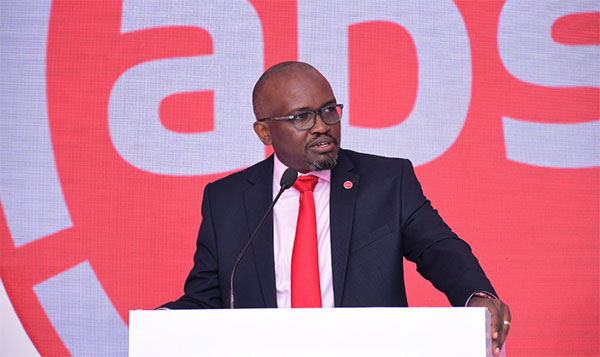
The Absa Bank Uganda Managing Director, David Wandera, noted that Uganda’s market progress is being driven by regulatory and policy reforms that strengthen transparency and investor protection.
Capital markets reforms introduced in 2025, covering collective investment schemes, securities offerings, licensing and approvals, and corporate governance, were cited as key to deepening markets, unlocking domestic capital, and attracting long-term international investment.