The Independent Uganda: You get the Truth we Pay the Price


Soroti, Uganda | URN | The Alito Bridge, a crucial crossing point for road users and the business community between Teso and Northern Karamoja, is in a state of disrepair that has drawn widespread fear and condemnation. This vital infrastructure connects Teso to Karamoja through Otuke, Abim, Kotido, Kabong and Karenga districts.
Since 2007, the bridge has been weighed down by poor conditions and frequent flooding, resulting in more than ten fatalities. The most recent tragedy occurred in August 2025, when three lives were lost as floodwaters swept away individuals attempting to cross to either Teso or Karamoja.
The hazardous state of the bridge has forced many truck drivers to take a longer route, opting to connect from Kotido through Moroto, Katakwi, and Amuria to reach Soroti. This detour not only increases travel time but also adds to the cost of transporting goods, further burdening the already struggling local economy.
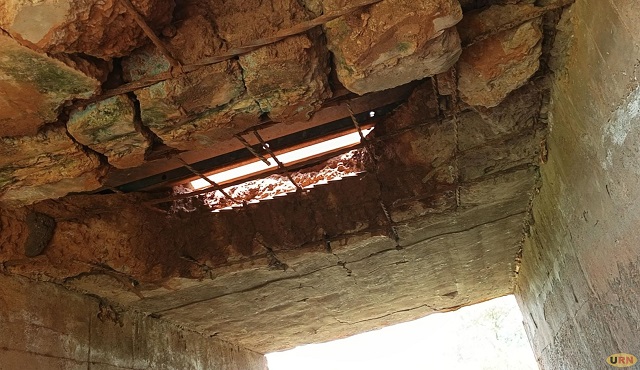
Observations of the bridge reveal a makeshift structure supported by sticks, with heavy stones piled on top to provide some stability. The binding metal components have been corroded, and the cement underneath has been eroded, leaving the bridge vulnerable to collapse.
Joseph Okello, a resident of Luka village in Otuke district, speaks to the community’s ongoing frustrations. “We have witnessed numerous accidents and chaos at the bridge,” he states. “Despite our efforts to call on leaders to take action, our pleas have fallen on deaf ears. The dire condition of this bridge has claimed many lives since 2007, and if the government truly cared, something would have been done by now.”
Okello elaborates that water from upper Teso and parts of Karamoja converge at the Alito Bridge, often arriving with significant force. Since the bridge is positioned low and is not elevated, heavy water flow exacerbates the already dangerous crossing conditions, often cutting off traffic.
Truck driver Alex Omaswa, who uses the Alito Bridge weekly, expresses his concerns for safety. “This bridge puts lives at risk,” he explains. “Since I need to access Otuke, I have no choice but to use this route. To mitigate the risk, I have to reduce the weight of my load to ensure my vehicle can safely cross.”
Omaswa adds that the surrounding roads from Amuria and Kapelebyong are also in poor condition, complicating travel for drivers. “The responsible offices need to visit this area and assist us. We have been stranded on the road multiple times because if a car gets stuck, there are no options available, and often the vehicle sustains damage due to the poor road conditions.”
John Paul Arusi, another truck driver, shares his apprehension every time he approaches the Alito Bridge. “Even now, before the heavy rains begin, crossing this bridge is challenging. Just wait until the rains increase; the struggle will be even greater. This situation is a time bomb, and if no action is taken, negligence will lead to more casualties in the future.”
Francis Akorikin, the LC5 Chairperson for Kapelebyong District, highlights the urgent need for intervention. He notes that the Alito Bridge falls under the Ministry of Works and Transport. Despite the district’s repeated requests for repairs and modernization, the situation remains unchanged. “Every rainy season, the Alito Bridge claims lives,” Akorikin states. “It is a tragedy waiting to happen, and there has not been a year without fatalities. This is the only route for the people of Northern Karamoja, and they have no choice but to traverse it, often at great risk to their lives.”
He emphasizes that the bridge’s deteriorating condition has broader implications.
“The state of the bridge affects not only local residents but also government services. Those needing to access health centers and students from Otuke attempting to reach Alito Seed Secondary School are often unable to cross during heavy rains. Furthermore, local businesses suffer as the Obalanga cattle market relies on this bridge. Northern Karamoja farmers cannot transport cattle or produce, severely impacting revenue collection for both districts.”
With only two routes available to access and exit Karamoja, many passengers with heavy loads have resorted to the far longer Kotido-Moroto-Katakwi route.
Akorikin reveals that the ministry cites lack of funds for repairs, urging Parliament to consider a supplementary budget for this urgent issue to save lives.”
The Alito Bridge stands as a stark reminder of the urgent need for infrastructure investment to protect the lives of those who rely on it daily. Without immediate action, it remains a ticking time bomb, poised to claim more lives in the future.