The Independent Uganda: You get the Truth we Pay the Price


Kasibante Asks Supreme Court to Open Up EC Electronic Voting Systems
Kampala, Uganda | THE INDEPENDENT | The Supreme Court has begun hearing an application to order the Electoral Commission and President Yoweri Museveni to release key election documents and allow access to electronic voting systems used in the January 15, 2026, presidential election.
Former presidential candidate Robert Kasibante filed the application as part of his election petition, in which he challenges the declaration of President Museveni as the winner of the election.
Museveni was declared the winner of the election with 7,946,772 votes, ahead of Robert Kyagulanyi Ssentamu, who came second with 2,741,238 votes. The other candidates included Nathan Nandala Mafabi with 209,039 votes, Gen Gregory Mugisha Muntu with 59,276 votes, Frank Bulira with 45,959 votes, and Mubarak Munyagwa 31,666 votes, while Kasibante himself obtained 33,440 votes.
But Kasibante wants the court to compel President Museveni to disclose all election-related documents in his possession. These include a complete list of all polling stations and certified copies of Declaration of Results (DR) forms from every polling station used in the presidential election.
He is also seeking access to the back-end systems of the Biometric Voter Verification System (BVVS), the Electronic Results Transmission and Dissemination System (ERTDS), and the tallying software used by the Electoral Commission. Kasibante wants court permission for an independent forensic audit of these electronic systems to assess how results were transmitted and compiled.
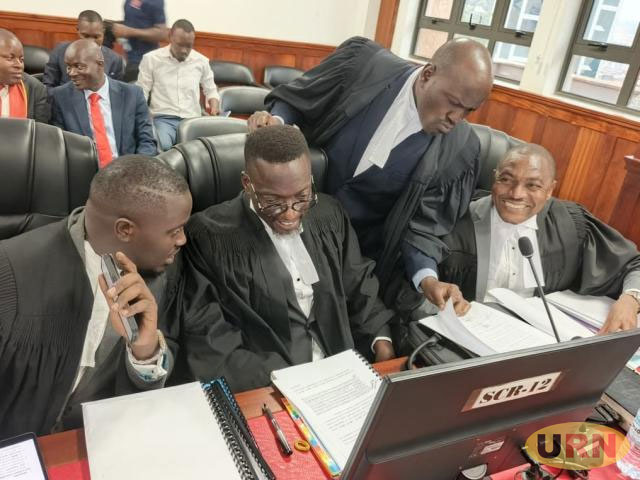
At the start of the hearing, Kasibante, through his lawyers Julius Galisonga and John Isabirye, asked the court to adjourn the proceedings to give them more time to file an amended application listing the additional documents he wanted to inspect.
According to Kasibante, these documents were necessary for an independent forensic examination of the electronic systems used by the Electoral Commission to transmit and tally election results at the National Tally Centre in Lubowa.
But lawyers representing President Museveni opposed the request for adjournment. Led by Ebert Byenkya and Edwin Karugire, they argued that presidential election petitions are governed by strict constitutional timelines that do not allow amendments, discovery of documents, or additional applications once the petition has been filed.
They told the court that the Supreme Court has only 45 days to hear and determine a presidential election petition. Any delay, they said, would risk running out of time and stripping the court of its authority to decide the case.
The lawyers described Kasibante’s application as “dead on arrival,” arguing that the petition had already been amended once and that the law does not allow further amendments. They maintained that if the main petition cannot be amended, then applications arising from it also cannot be amended.
They further argued that all documents a petitioner intends to rely on must be filed together with the petition. Allowing new documents later, they said, would unfairly prejudice the respondents and disrupt the uninterrupted hearing required in election cases. They asked the court to dismiss the application.
Former Attorney General Mwesigwa Rukutana, representing the Electoral Commission, also opposed the adjournment. He argued that Kasibante’s case was fundamentally flawed and could not be fixed through amendments.
“My Lords, it would be a waste of time to proceed with this dead horse. The petitioner should proceed with his petition and demonstrate that it cannot stand and is incurably defective,” Rukutana said.
Attorney General Kiryowa Kiwanuka also opposed the application, noting that Kasibante filed his petition on January 19 and applied for discovery just three days later, even before the respondents had filed their responses. He questioned the necessity of discovery at such an early stage and argued that the documents being sought were not relevant to the issues raised in the petition.
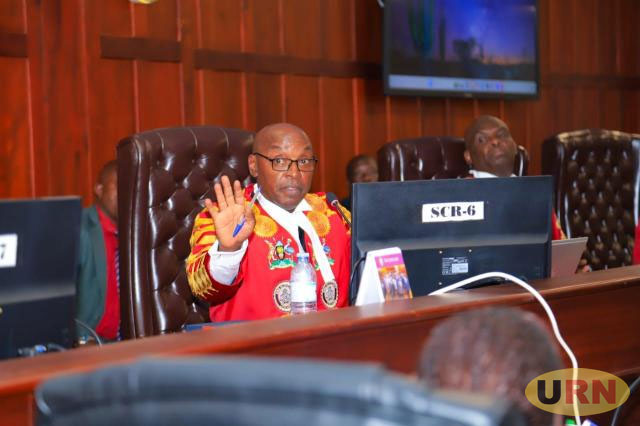
He added that ten of the 45 days allowed for the petition had already been used. In their ruling, the Supreme Court justices, led by Chief Justice Dr Flavian Zeija, said they had held extensive internal discussions on whether amendments were permissible. However, they decided to proceed with hearing the main application instead.
The court rejected Kasibante’s request for an adjournment, citing the strict constitutional timelines governing presidential election petitions. The justices said they would provide detailed reasons for rejecting the adjournment in a formal ruling to be delivered later. After delivering the decision, the court took a ten-minute break before adjourning the matter to February 3, 2026.
Chief Justice Zeija directed all parties to meet either Thursday or Friday to agree on a hearing schedule for the petition. He ordered them to file a joint scheduling memorandum and written submissions on the application, which must be shared with all parties.
He further directed President Museveni and the Electoral Commission to file their responses by Sunday, February 1, 2026, while any rejoinders must be filed by February 2, 2026. The parties will return to court on February 3, 2026, when the application will be heard, and further directions on the petition will be issued.
Kasibante accuses the Electoral Commission of failing to conduct a free and fair election. He alleges widespread irregularities, including violence, voter bribery, misuse of state resources, failure to gazette polling stations, lack of transparency in vote counting and result transmission, and biased conduct by state security agencies.
He is asking the Supreme Court to nullify President Museveni’s election, cancel the declared results, and order fresh elections in accordance with the law. He also seeks the invalidation of results from polling stations he claims were illegally established, a full audit of election materials, and an award of costs.
The Electoral Commission, the Attorney General, and President Museveni have all asked the Supreme Court to dismiss the petition, arguing that it is incurably defective, unsupported by evidence capable of affecting the election outcome, and a waste of the court’s time.
****
URN