The Independent Uganda: You get the Truth we Pay the Price



Once again, Africa finds itself on the receiving end of global crises; paying the price in growth, stability, and livelihoods
NEWS ANALYSIS | RONALD MUSOKE | When the so-called coordinated military strikes by the United States and Israel hit Iranian territory on Feb. 28, the escalation marked a decisive turning point in a conflict that has been decades in the making. What began as a shadow war; fought through proxies, cyber operations, and sporadic direct confrontations, had already intensified through retaliatory exchanges in 2024 and a brief but volatile 12-day war in June 2025.
But the events of early 2026 transformed a simmering war into a full-scale geopolitical rupture. And as missiles flew across the Middle East, the economic shockwaves began traveling far beyond the region, reaching deep into African economies with surprising speed and severity.
Just over a month later, on April 2, policymakers and development leaders gathered in Tangier, Morocco, on the margins of a major continental meeting to assess the fallout. What emerged from that briefing, convened on the margins of the 58th session of the Economic Commission for Africa conference of finance, planning and economic ministers was a stark message issued by the African Development Bank, the African Union Commission, the United Nations Development Programme, and United Nations Economic Commission for Africa.
Senior officials from the four institutions collectively agreed that Africa is facing yet another external shock; only this time, the transmission channels are faster, more concentrated, and potentially more destabilizing than before.
A shock with speed and scale
Africa entered 2026 already on uncertain footing. Many economies were still growing below their pre-COVID trajectories, with limited fiscal space and elevated debt burdens. The Middle East conflict has now introduced a new layer of risk, threatening to derail fragile recoveries.
According to the joint policy brief published by the convening institutions, the continent could lose at least 0.2 percentage points of GDP growth in 2026 if the conflict persists beyond six months. While that figure may appear modest, its implications are significant in economies where growth is tightly linked to employment, income generation, and poverty reduction.
More concerning, however, is the nature of the shock itself. Unlike previous global crises, the current disruption is spreading rapidly through tightly interconnected systems; energy markets, food supply chains, shipping routes, and financial flows, leaving little time for governments to respond.
“Continued escalation of the conflict worsens global instability, with serious implications for energy markets, food security, and economic resilience, particularly in Africa where economic pressures remain acute,” said Mahmoud Ali Youssouf, the Chairperson of the African Union Commission.
The Middle East remains a critical economic partner for Africa, accounting for 15.8% of its imports and 10.9% of its exports. At the same time, strategic chokepoints such as the Strait of Hormuz, through which around 20% of global oil exports pass, have become flashpoints of uncertainty, amplifying volatility in global markets.
From oil shock to household crisis
The most immediate transmission channel has been energy. Oil prices surged by more than 50% within weeks of the escalation, triggering inflationary pressures across African economies heavily dependent on imported fuel. But the consequences extend far beyond fuel costs. Rising energy prices are feeding into transportation, manufacturing, and food production, pushing up the overall cost of living. The policy brief warns that the initial trade shock could quickly evolve into a full-scale cost-of-living crisis, driven by a combination of higher fuel and food prices, rising shipping and insurance costs, exchange rate pressures, and tightening fiscal conditions.
Currency depreciation is already compounding the problem. Twenty-nine African currencies have weakened, increasing the local-currency cost of imports and external debt servicing. For countries with large import bills and limited foreign exchange reserves, this creates a dangerous cycle of rising costs and shrinking fiscal space. The burden is falling most heavily on vulnerable economies, including Senegal, Sudan, Cabo Verde, South Sudan, and The Gambia, where high debt levels and import dependence leave little room for maneuver.
The fertilizer factor
While energy prices dominate headlines, policymakers in Tangier highlighted a less visible but potentially more consequential risk: disruptions to fertilizer supply. The Middle East plays a crucial role in global fertilizer production through its supply of liquefied natural gas, a key input for ammonia and urea. Disruptions to this supply chain are already constraining availability and driving up prices–by more than 30% within weeks of the conflict’s escalation.
For Africa, the timing could not be worse. The March-to-May planting season is critical for agricultural production across much of the continent. Reduced access to affordable fertilizer during this period could lead to lower yields, reduced output, and higher food prices later in the year.
“Fertilizers are not a side issue. They are the backbone of food production,” said Ahunna Eziakonwa, the UN Assistant Secretary-General and Director of the Regional Bureau for Africa at UNDP. “When fertilizer prices rise, farmers use less. When farmers use less, yields drop. And when yields drop, food prices rise and food insecurity deepens.” The warning echoes the experience of previous global shocks, including the war in Ukraine, when fertilizer shortages translated directly into reduced agricultural output and heightened food insecurity.
Uneven impacts, limited upside
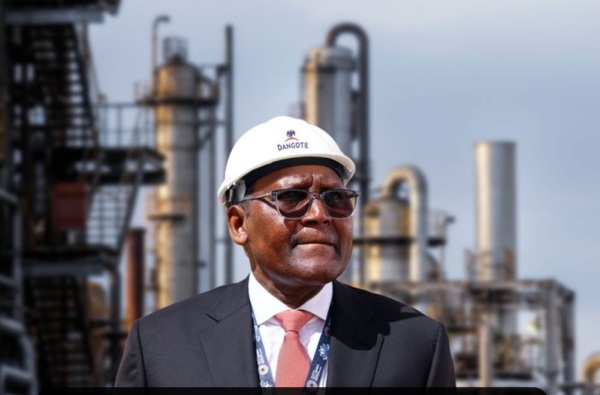
Despite the widespread risks, the conflict is not without localized benefits. Some African economies are seeing short-term gains from higher commodity prices and shifting trade routes. Nigeria, for example, stands to benefit from rising oil prices and increased export capacity from the Dangote Refinery. Mozambique could gain renewed momentum in its liquefied natural gas sector, while ports in South Africa, Namibia, and Mauritius are experiencing increased traffic as shipping routes divert around the Cape of Good Hope.
In East Africa, Kenya is emerging as a logistics hub through Lamu Port and Nairobi, while Ethiopia is leveraging its aviation network to serve as an emergency air bridge linking Asia, Africa, and Europe. Yet these gains are uneven and, in many cases, temporary. They do little to offset the broader pressures facing the majority of African economies. Across the continent, rising inflation, tightening fiscal conditions, and growing food insecurity are expected to outweigh any localized windfalls.
A changing geopolitical landscape
Beyond economics, the conflict is reshaping Africa’s geopolitical environment. A prolonged Middle East crisis could intensify competition for influence across the continent, with major powers; including the United States, China, Russia, Gulf states, Iran, and Türkiye, seeking to expand their presence.
In fragile contexts such as Sudan, Somalia, and Libya, where external involvement already plays a significant role, this could exacerbate existing conflicts and complicate peacebuilding efforts. Humanitarian operations are also at risk. Rising shipping and insurance costs could increase the cost of delivering aid to vulnerable regions, particularly in the Horn of Africa. At the same time, shifting global priorities may divert donor funding toward the Middle East, placing additional strain on already constrained development and humanitarian resources in Africa.
From vulnerability to resilience
Yet amid the war, African policymakers are framing the moment as a test and an opportunity. “Africa has been hit by too many external shocks not of its making,” said Claver Gatete, the Executive Secretary of UNECA.
“This moment calls for decisive action, to protect people now, but also to accelerate Africa’s long-term push towards energy security, food sovereignty, and financial self-reliance. Crises like this reinforce why Africa must finance more of its own future and strengthen regional solutions that build resilience before the next shock hits.”
Eziakonwa reinforced this perspective, emphasizing the need for a shift from reactive crisis management to proactive resilience building. “This moment demands leadership, within Africa and from its partners,” she said. “With the right mix of policy choices, financing tools, and political resolve, Africa can weather this shock and emerge more resilient, more self-reliant, and better positioned to shape its own economic future.”
She pointed to emerging opportunities, particularly in fertilizer production and regional supply chains. Countries such as Morocco, Nigeria, and Egypt are already major producers, while others are investing in local blending facilities. “This is how what was once a point of vulnerability could actually become a source of strength,” she said. “Africa can move from being a price-taker in global markets to building more self-reliant, regionally integrated supply systems.”

A roadmap for action
The policy brief outlines a comprehensive response strategy across three-time horizons. In the short term, governments are urged to stabilize fuel, food, and fertilizer supplies through emergency financing, pooled procurement, and the establishment of food corridors. Targeted social protection measures are recommended to shield vulnerable populations, while avoiding broad subsidies that could strain public finances.
Central banks are encouraged to adopt flexible monetary and exchange rate policies to manage inflation and stabilize currencies, while international financial institutions are called upon to provide rapid budget support, trade finance, and liquidity.
Over the medium term, the focus shifts to strengthening energy security, expanding renewable energy, and accelerating regional trade under the African Continental Free Trade Area. Enhancing domestic resource mobilization and rebuilding fiscal space are also seen as critical priorities.
In the long term, the report calls for a fundamental transformation of Africa’s economic architecture—toward greater self-reliance, stronger financial safety nets, and reduced exposure to external shocks. “As global crises multiply, Africa’s response must evolve from managing shocks to fostering resilience,” said Sidi Ould Tah, the President of the African Development Bank Group. “African institutions and development partners need to act swiftly and in concert, leveraging their comparative advantages to cushion short-term shocks while laying the foundations for long-term resilience.”
A defining moment
The Iran–U.S. war is, in many ways, a distant conflict for most Africans. Yet its economic consequences are immediate, tangible, and deeply felt—from rising fuel prices to the cost of a bag of fertilizer or a loaf of bread. It is also a reminder of a persistent reality: Africa remains highly exposed to external shocks, even when it plays little role in their origins. But as leaders in Tangier emphasized, this moment is not only about vulnerability—it is about choice.
Africa can continue to absorb shocks and rebuild, time and again. Or it can use this crisis as a catalyst to accelerate long-delayed reforms, strengthen regional integration, and build more resilient, self-reliant economies. In the end, the true impact of this war on Africa may not be measured only in lost growth or rising prices, but in whether it compels the continent to finally reshape its economic future on its own terms.