The Independent Uganda: You get the Truth we Pay the Price


Kampala, Uganda | JULIUS BUSINGE | The COMESA Competition and Consumer Commission has issued a strong warning to businesses across its member states against exploiting the ongoing Middle East crisis, cautioning that firms engaging in price gouging, hoarding or collusion will face strict enforcement action.
In an urgent statement, CCCC Chief Executive Officer Willard Mwemba said the unfolding conflict is already disrupting global supply chains, triggering price shocks and threatening economic stability across the region.
“The ongoing disruptions to global supply chains arising from the developments in the Middle East are deeply concerning,” Mwemba said, noting that crises of this nature have far-reaching ripple effects beyond their immediate geographic location.
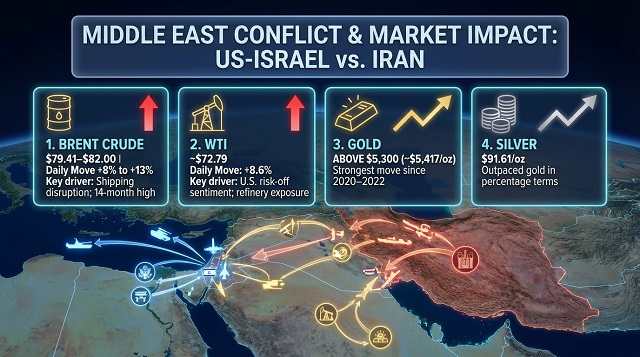
He pointed to rising crude oil prices as an early sign of the disruption, warning that the knock-on effects are likely to spread quickly across multiple sectors. Increased fuel costs, he explained, are expected to drive up transport and production expenses, ultimately raising the prices of goods and services across the Common Market.
The Commission warned that the situation could significantly affect food systems, particularly through higher fertiliser prices driven by increased energy costs. This, Mwemba said, risks pushing up food prices and inflation, worsening poverty levels in a region already grappling with economic pressures.
“We have already witnessed price shocks and supply deficits of crude oil with knock-on effects on the prices of all other products and services,” he said, adding that such trends could undermine ongoing efforts to stabilise markets and improve livelihoods.
Against this backdrop, the Commission expressed concern that some businesses may take advantage of the crisis to engage in anti-competitive conduct and unfair trade practices. These include excessive pricing, collusion among competitors, hoarding of essential goods and other forms of market manipulation.
Mwemba issued a direct warning to companies operating within the COMESA region, saying the crisis does not justify any violation of competition and consumer protection laws.
“We unequivocally caution all businesses that these circumstances do not justify any form of anti-competitive conduct or unfair trade practices,” he said. “We shall unapologetically, together with member states, enforce the law to ensure that confidence in markets is not eroded.”
He added that the Commission will deploy its full investigative and enforcement powers to detect and penalise offenders, signalling a zero-tolerance approach to exploitation during the crisis.
The statement also underscored the international dimension of the unfolding situation, noting that global supply chains are increasingly interconnected. Disruptions in one region can quickly transmit economic shocks worldwide, making coordinated regulatory responses essential.
At the same time, Mwemba acknowledged that in certain exceptional circumstances, some forms of coordination among businesses may be necessary to address broader public interest concerns, such as ensuring supply of essential goods. Under COMESA regulations, companies may apply for authorisation for such arrangements if the benefits outweigh the potential harm to competition.
This provision, he said, ensures that policy flexibility exists without opening the door to abuse. The Commission is now urging consumers and businesses to report any suspected cases of unfair practices, emphasizing that public vigilance will be key to maintaining fair markets during the crisis.
Mwemba said the regulator remains committed to protecting consumers and supporting honest businesses, stressing that market integrity is critical to the region’s economic resilience.
“The CCCC will not allow the crisis to be used as a pretext for collusion, exploitation or deception,” he said. “Maintaining trust in markets is essential to the region’s recovery and consumer welfare.”
The warning comes as governments and regulators across the globe closely monitor the economic fallout from the Middle East crisis, with concerns growing over inflation, supply shortages and the potential for market distortions if oversight is weakened.