The Independent Uganda: You get the Truth we Pay the Price


Probing FUFA’s spending, player allowances, and the transparency of Uganda’s football finances
SPECIAL REPORT | JULIUS BUSINGE | The lane that leads to FUFA Hotel in Kisaasi is a short but stubborn stretch of Kampala life: a narrow, unpaved access road—less than a kilometre off the main tarmac—that turns red and dusty whenever traffic and the sun do their work.
The route peels off from the Bukoto–Kisaasi tarmac artery into a patchwork of compacted earth, loose gravel, and ruts, the kind of road that throws clouds of dust into the air each time a coach, pickup, or pedestrian passes. Locals and visitors alike describe it as long, gritty, and unrelenting—a raw first impression for anyone arriving at the hotel compound.
During the 2024 CHAN tournament under the PAMOJA arrangement, this dusty approach became more than just a logistical hurdle; it became a talking point. Images and videos of Uganda Cranes players and staff navigating the red earth, laundry hanging on balconies, and vehicles kicking up clouds circulated widely on social and traditional media, sparking debates about the adequacy of the team’s accommodation.
While FUFA defended the site as a customised football environment, reports from the period show the practical challenges: players doing recovery walks on uneven ground, support staff ferrying equipment across loose soil, and buses negotiating ruts and potholes—small logistical headaches that nevertheless shaped public perception of the national team’s preparation.
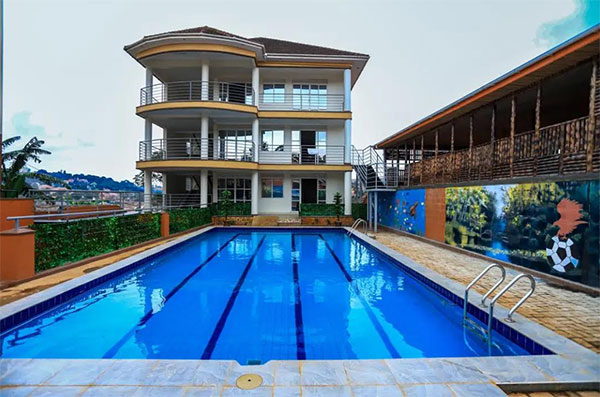
The contrast is striking. Within the semi-urban neighborhood, the FUFA compound presents a controlled, fenced-in environment, complete with a pool and tailored team spaces. But the last stretch of the journey feels rural: during dry spells, a haze of dust settles on boots, kit bags, and vehicle interiors; during rains, the lane turns slick, patchy, and riddled with puddles. For teams traveling by bus or car, these conditions add minutes to transfers and require extra care for equipment and recovery routines—details that can matter immensely in elite sport logistics.
The dusty, red-earth road leading to FUFA Hotel thus framed the first impressions of the Uganda Cranes’ accommodation under the PAMOJA arrangement in August.
Beyond mere inconvenience, it became a visual symbol for fans and analysts: if the team’s journey to their base was rugged and uneven, what did that say about the planning, facilities, allowances, and overall governance supporting Uganda’s top footballers?
For many, the lane encapsulated broader questions about whether Uganda’s national team was receiving the resources and environment necessary to perform at a continental level, sparking scrutiny that went far beyond the dust itself.
Uganda Cranes’ historic run at the 2024 CHAN tournament came to an end in the quarterfinals, where they were eliminated by a determined Algerian side. During the group stage, the Cranes competed in Group C alongside Algeria, Guinea, Niger, and South Africa, managing to top the highly competitive group and secure their first-ever progression beyond the preliminary round.
Their journey to the quarterfinals was marked by disciplined performances and tactical cohesion, with notable victories that energized fans and demonstrated the growing quality of domestic Ugandan talent.
Fan perspectives
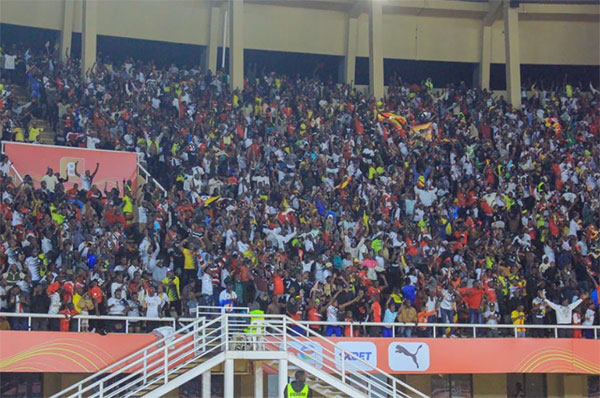
Paul Ochaya, a longtime Cranes fan from Kisaasi told The Independent, “Watching the Cranes play at Mandela National Stadium was exhilarating! Reaching the quarter-finals for the first time is historic for our team. I’m glad the players received their allowances and bonuses on time—it clearly helped them focus on the pitch—but honestly, some of us feel the amounts could have been a bit higher considering the milestone they achieved.”
Living in Kisaasi, Ochaya said, “I know the dusty, murrum road that leads to FUFA Hotel, where the Uganda Cranes were accommodated. Despite the rough access road, seeing our boys train and compete with such focus and determination made me proud to be a fan.”
Linda Mbabazi echoed the sentiment in an interview with this reporter: “The players were paid their allowances and bonuses on time, which is great, but a higher reward would have been more fitting for this historic achievement.”
Mbabazi added that the FUFA Hotel in Kisaasi raised eyebrows among fans; the dusty, rough road didn’t feel like a proper base for Uganda Cranes stars. “Yet, seeing the team fight hard in every game made it clear that their focus and commitment never wavered. I’m proud to be a Cranes fan—our boys are showing real promise on the continental stage,” Mbabazi said.
Players themselves reflected similar pride tempered with realism. Winger Allan Okello, the tournament’s top scorer for Uganda, said, “I thank all Ugandan football supporters for throwing your entire energy behind the Uganda Cranes during CHAN 2024. Your love and support carried us to the historic milestone of reaching the quarterfinals.” Another player promised fans a stronger comeback, adding, “We are grateful for the support and we won’t let you down; we will come back stronger and make the nation proud.”
FUFA’s defense
FUFA President Moses Magogo defended the federation’s decisions regarding the Kisaasi hotel and player allowances. “A football hotel is customised. It is not a general hotel where you want and whatever you want,” Magogo said during media engagements. “This exclusivity allows us to prepare our own food, our own way. The hotel has its own gym, and we are developing an outdoor arena and training pitch. CAF has inspected and approved the facility.”
On player compensation, Magogo detailed that Uganda Cranes received a daily allowance of $100 while in camp from July 29, with performance-based bonuses ranging from $2,000 per win to $10,000 for winning the tournament. These were supplemented by presidential pledges of Shs1.2 billion per match won. Magogo argued these arrangements were consistent with continental norms and aligned with CAF regulations.
Ahmed Hussein, FUFA Communications Director, added that the federation’s success during CHAN, recognized in CAF awards, reflected growing football prowess in Uganda.
“We will leverage this momentum to boost grassroots development, infrastructure growth, and capacity building, propelling Ugandan football to new heights,” he told The Independent. Hussein cited recent investments by President Museveni in sports infrastructure across Kampala, Masaka, Hoima, and Lira as part of a national strategy to improve facilities and elite athlete performance.
Political oversight
The CHAN campaign drew attention at the parliamentary level. Speaker of Parliament Anita Among questioned why the tournament lacked public buildup compared to government-hosted summits like NAM and CSPOC. She also tasked the Auditor General to audit the Shs1 billion allocated to FUFA for CHAN 2024, noting the report would guide preparations for AFCON 2027. This audit report had not been submitted to Parliament by press time.
Other MPs celebrated the team’s achievements. Peter Ogwang, Minister of State for Sports, praised the Cranes for reaching the quarter-finals for the first time in six attempts, stating, “The team delivered a historic milestone. This elevates Uganda’s football profile on the continent and inspires confidence in domestic league players.” Opposition leader Joel Ssenyonyi emphasized the need for holistic support, saying, “Let us facilitate the players throughout the process, not only when they are playing.”
Comparative standards
Uganda’s allowance and bonus structures sit in the middle-to-lower range among CHAN participants. Kenya’s incentives, for instance, are heavily performance-based in Kenyan shillings, guaranteeing participation sums and per-match wins, with mid-tournament reporting indicating hundreds of millions already disbursed.
Uganda, in contrast, combines presidential pledges with federation-paid US-dollar bonuses, daily camp allowances, and private sector top-ups. While the sums appear substantial—up to $10,000 for winning CHAN—the public debate reflects concerns over delayed payments, transparency, and equity relative to other federations.
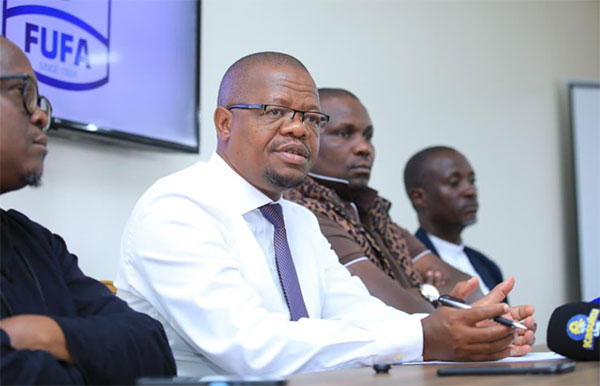
Elly Kyeyune, a prominent sports commentator and analyst, offered a nuanced perspective on Uganda Cranes’ performance and the broader operational context of their CHAN 2024 campaign.
On the tactical and strategic front, Kyeyune praised the team’s cohesion and disciplined execution, noting that Uganda’s performance was not solely about individual talent but the smart deployment of local players within a well-structured system. “Looking beyond the raw results, how would you contextualize Uganda’s tactical and operational performance at CHAN against other competing nations?” he posed rhetorically in an interview with The Independent, before answering. “From an analytical standpoint, Uganda’s tactical discipline, efficient use of local talent, solid infrastructure upgrades, and relentless fan support set them apart from teams that may have had flashier individual profiles but lacked cohesion and operational readiness.”
On player welfare and governance, Kyeyune provided a comparative analysis with other CHAN participants. He noted that Uganda’s daily allowances of $100, supplemented by performance-based bonuses, placed the Cranes in a mid-to-lower tier compared with some continental peers.
He said: “Uganda’s player-welfare picture at CHAN 2024 sat somewhere in the middle-to-low range of the tournament field. The daily $100 allowance and bonuses for wins, draws, and advancing through stages are modest compared to richer federations like Algeria, Morocco, and Egypt, but they are comparable to neighbours Kenya and Tanzania.”
Kyeyune stressed that these figures alone do not fully capture the disparities, as late payments and opaque financial governance still leave players exposed. He argued that the challenge was not merely about numbers but systemic reliability: ensuring that allowances, bonuses, and welfare arrangements are consistent, transparent, and integrated into a broader culture of accountability.
Going forward, he urged FUFA to adopt stronger accountability mechanisms, establish clear revenue-sharing models, and involve stakeholders in meaningful oversight, arguing that these steps are essential not only for player morale but for elevating Uganda’s professional football standards on the continental stage.
“Addressing these governance and welfare gaps will help ensure that players are not only motivated by performance incentives but also supported by a system that values transparency, fairness, and strategic planning,” he said.
Dr. Joseph Kyaterekera, a Kampala-based medical practitioner, highlighted the link between welfare and performance.
“While I was not directly involved with the team’s medical operations during the tournament, the level of performance displayed suggests that players benefited from appropriate medical and physiological support,” he told The Independent. However, he added, sustainability is key—consistent investment in holistic player welfare, integrating nutrition, sports medicine, psychological support, and recovery, must be non-negotiable for long-term success.
Accommodation standards
The FUFA Hotel in Kisaasi is a functional facility, providing tailored spaces for training, physiotherapy, and player recovery. However, the dusty, unpaved road leading to it—less than one kilometre from the main tarmac—posed logistical challenges. Fans and observers noted the contrast: inside the hotel compound, players had a controlled environment; outside, vehicles and pedestrians kicked up dust, affecting kit, transport, and perception. While FUFA argued the facility is purpose-built, critics suggested that for elite-level competition, higher-standard hotels in Kampala could provide superior comfort, morale, and international comparability.
Anold Odongo one of the Cranes players, speaking at a media briefing, expressed optimism: “We are very happy. We appreciate the support from fans, which carried us through the tournament. We will continue to strive for excellence.” Allan Okello added, “The energy of Ugandan supporters inspired us. We are grateful, and we promise a stronger comeback to make the nation proud.”
Broader implications
The CHAN experience exposes a recurring challenge in Ugandan football: balancing resource constraints, accountability, and player welfare. Public disputes over allowances, housing, and logistical arrangements reflect gaps in financial governance.
Despite CAF-approved facilities and presidential pledges, FUFA’s lack of transparent reporting and independent verification fuels skepticism about whether resources are used optimally.
Comparative analyses reveal that some nations provide clearer, per-player payouts; others, like Uganda, rely on complex mixes of presidential, federation, and private-sector contributions. Without standardized disclosure, the public cannot confirm if payments are timely, equitable, or sufficient to incentivize players relative to regional peers.
Going forward, experts, MPs, and stakeholders have offered policy-oriented suggestions. These include: institutionalizing allowance and bonus schedules; benchmarking player welfare against regional standards; increasing transparency of expenditure; investing in higher-standard accommodation for elite camps; and strengthening medical, nutritional, and psychological support.
Dr. Kyaterekera emphasized holistic, sustainable welfare, while Kyeyune highlighted operational discipline and infrastructure as key to maintaining competitiveness. Parliamentary oversight through audits and financial reporting is recommended to ensure long-term accountability and public trust.
The dusty lane to FUFA Hotel may be a microcosm of larger systemic issues in Ugandan football: logistical compromises, contested allowances, and limited transparency. The 2024 CHAN campaign revealed the Cranes’ potential, but also the structural gaps in governance and player welfare.
As Uganda prepares for AFCON 2027, lessons from fan feedback, expert analysis, and parliamentary scrutiny will be critical. Ensuring players have world-class facilities, predictable and fair allowances, and robust governance mechanisms will determine not only their continental performance but also public trust and national pride.
In the balance between national pride and fiscal accountability, FUFA’s next moves will define the trajectory of Ugandan football for years to come.
*****
This article was written with support from African Centre for Media Excellence (ACME).