The Independent Uganda: You get the Truth we Pay the Price


Can President Museveni translate his immense political support from the recently concluded elections into capital to drive massive political and economic reforms that will cement his legacy?
COMMENT | NNANDA KIZITO SSERUWAGI | President Yoweri Museveni won the 2026 polls with his highest score (71%) since 1996 (74%). Robert Kyagulanyi (Bobi Wine) also received the fewest results (24%) of any main opposition candidate running against Museveni since 1996, when Paul Kawanga Ssemogerere scored 23%. Museveni’s remarkable 2026 performance also came after one of his worst election results, having scored only 58% in the 2021 elections – his lowest score since 1996. Putting all the above into perspective, it makes obvious the significance of this term for Museveni. It is a term he got with considerable political capital, which he has to spend and spend well. It is also a term he got with a very weakened opposition, giving him the leverage to pursue whatever plans he has with little let or hindrance. It also seems to many that time has taken a toll on him, physically and intellectually. The exhaustion of age, we hope, also nudges him to plan this as his last term in office and thus lay a foundation for a good political transition in the next four years.
I do not have access to the walls and corridors of the statehouse to comprehend and predict the state of things there, as far as the transition is concerned. But public comments by outside insiders like the Old Man, Andrew Mwenda, are deeply revealing.
For clarity, by transition, I mean not just the change of leadership at the presidency but a fundamental change in the political conduct of our public servants. Now, let’s get back to Andrew’s insights into the court politics around Museveni.
President Museveni has been worn down by the load he has carried of governing Uganda for the last forty years. The question now is how to get Uganda to function in the next five years and even into the future. When he came to power, Museveni managed to steer Uganda from economic collapse, political instability, and the near-total state collapse we faced from the 1970s through the 80s by applying several strategies. One of these was a political strategy emanating from a personal attribute he has of strategic patience. However, over the years, Mwenda observes, this strategic patience has, in some aspects, degenerated into inaction. Under these circumstances, how do we get the president to execute his manifesto with quick, decisive and effective prowess?
Museveni needs to appoint key personnel both in his cabinet and the state bureaucracy who are capable of cutting through the web of political intrigue and buccaneering; bureaucratic wrangling; and the carefree, lethargic, happy-go-lucky attitude that defines his government’s public and civil services today.
Andrew observes that Museveni’s court is so captured and held hostage by different powerful factions that even if you got the best, most talented, most skilled, and most public-spirited people to run various entities in government, these powerful power brokers would manoeuvre their way around the State House to undermine, obstruct, or sabotage that person and eventually cripple them from working unless they have direct and reliable access to the president to defend themselves against the mountain of lies likely to be told about them.
Part of the explanation for failure in our country’s governance today is not necessarily a lack of skills and goodwill on the side of appointed officials. What many lack is the necessary ingredient required to function in Uganda’s murky and dysfunctional system today – the “political weight to tilt the balance of political action” into effective state action.
How Museveni reconfigures his system in the new term is critical to realising Vision 2040. Even if we are to achieve only 50% of the goals set to be achieved in the next 14 years, a lot must be done differently. We need to triple the average rate of economic growth from 6.7% to 16% per year if we are to build a $580 billion economy by 2040. At the risk of being hopelessly pessimistic, I do not believe we shall achieve that. But assuming we are to spend all our efforts past exhaustion to make this economic miracle come true, what should we do?
Our options seem limited.
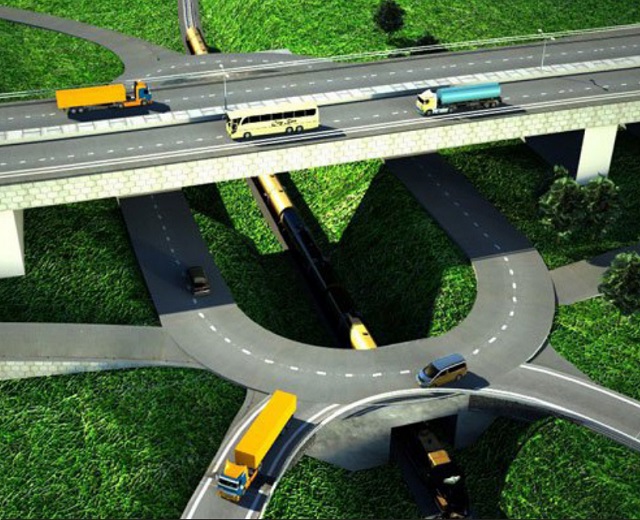
We need to undertake massive investments in energy and transport infrastructure projects. Expanding an economy 1000 times as we plan to do under Vision 2040 requires huge volumes of electricity to propel massive industrialisation. Then we need to build railways, highways, airports, and seaports to transport goods and services. An economy of half a trillion dollars also requires wide and advanced internet connectivity with high-speed internet, etc. This is the soft infrastructure that runs advanced economies. When you have all the above and much more considered, the next question is how to fund them.
Historically, countries that executed grand master plans to achieve dramatic industrial and economic transformation in record time frames, such as China, South Korea and Japan, did so partly because they controlled at least 90% of the financing either through their national banks or through the private sector, which they indirectly controlled. Financing industrial projects and other critical sectors to achieve socio-economic transformation takes a very long time and therefore requires huge amounts of credit at very low interest rates with long-term payment plans. This type of financing cannot come from multinational commercial banks that characterise our economy. Public intellectuals concerned with these profound questions, such as Andrew Mwenda, have proposed that the government pass a financial instrument(s) to mobilise long-term household savings that can finance transformative investments. We can debate the feasibility of this, but for now, that is even beside the point because the government currently lacks tangible plans to finance long-term transformative investments.
I appreciate that Museveni has managed a delicate balancing act for the last forty years to stabilise the political dispensation in Uganda and hold multiple competing factors in equilibrium. To do so, he has sometimes had to corrode the independence and effectiveness of state organs by allowing or partly building networks of personal loyalties and informal power arrangements to enable him to intricately manage power. I do not see any alternative way he would have successfully governed a largely backward, agrarian, multiethnic polity. And I construe that as the kind of politics that has enabled him to rule for such a long time but also enabled Uganda to have a long period of political stability and certainty within which economic development has been guaranteed.
But the window for Museveni’s complex governance system is now closing fast. This tenure, if not the last, is one of the last under which he must cement his legacy by unravelling the mesh he has woven around his personal power. The very attributes that assisted his political success and stabilised the country could now undermine the country’s stability in the future, because they are not transferable assets that he can hand over to the successor.
I do not claim to understand how or what Museveni has to do now to set a smooth sail for the next phase of our country’s history post him. But looking back at where we have come from, the successes we have registered, and the mega-plans we have for the future, I hope we find the wisdom to navigate forth from here without breaking the gains.
***
 The writer is a Ugandan thinking about Uganda.