The Independent Uganda: You get the Truth we Pay the Price


COMMENT | JEREMIAH NYAGAH | As the world marks World Water Day 2026 under the theme “Water and Gender”, we are reminded of a reality that is as urgent as it is unjust: the global water crisis does not discriminate. It falls on families, communities, and children. This demands a response that is inclusive of everyone. If we are serious about achieving equitable access to water for all, then we must be equally serious about placing every voice – women, men, girls, and boys – at the center of water management, governance, and leadership.
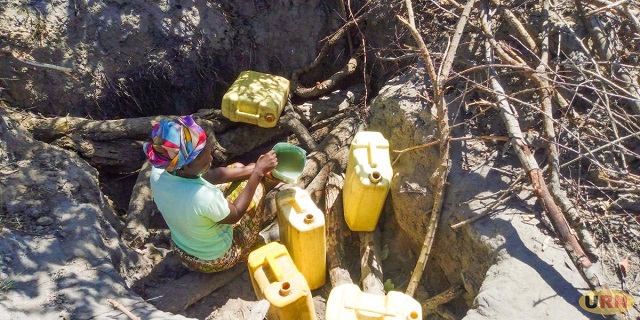
In Uganda, the story of water is often a story of sacrifice. Communities are held back by the absence of something as fundamental as clean water. Women and girls spend up to five hours each day collecting water. That is time taken away from school, from economic opportunity, and from personal safety. But they are not alone in this burden.
Boys, too, are often pulled from classrooms to help fetch water, trading lessons for jerrycans. Men frequently shoulder the responsibility of securing water for households when sources are distant or unreliable, affecting their productivity and income. Across the board, families are stretched thin by a basic need that should never be a daily struggle.
Children, girls and boys alike, miss classes not because they lack ambition but because they are burdened with responsibility. Women and girls risk violence on long and isolated journeys to distant water sources, while boys may face physical strain and unsafe conditions navigating difficult terrain. Meanwhile, entire households remain vulnerable to waterborne diseases such as cholera, typhoid, and dysentery – preventable illnesses that continue to claim young lives and disrupt family stability.
This is not simply a challenge of infrastructure. It is a question of inequality.
At World Vision Uganda, we have witnessed both the depth of this challenge and the power of intentional, inclusive action. Between 2021 and 2025, our Water, Sanitation, and Hygiene (WASH) interventions reached approximately 1.16 million people with clean water, hygiene promotion, and improved sanitation services. Within this, 645,749 people gained access to clean water, 1,041,423 to basic sanitation, and 824,257 to basic hygiene services. These are not just numbers, they represent lives changed, diseases prevented, and protected.
Our work has also extended to institutions that shape communities. Over the past five years, we have supported 131 schools with clean water, 106 with improved sanitation, and 155 with hygiene services, ensuring that children, especially girls managing menstrual health and boys navigating dignity in shared spaces, can learn in safe and supportive environments. In addition, 76 health facilities have been reached with clean water, strengthening healthcare delivery for all.
Yet even with this progress, significant gaps remain. A substantial portion of Uganda’s population still lacks access to basic WASH services. Poor sanitation and unsafe water continue to contribute to high rates of child illness, malnutrition, and stunting. Inadequate facilities in schools and health centers undermine dignity and limit opportunity for everyone, regardless of gender. At the same time, climate change, rapid population growth, and urbanization are placing increasing pressure on already strained water systems.
And within all these challenges, one truth persists: women, and children remain under-represented in the very systems designed to serve them. Too often, women and girls are seen only as water collectors rather than decision-makers. This must change.
A water point constructed without the input of women risks being poorly located or unsustainable. A system designed without considering men’s roles in financing and maintenance may struggle to endure. A water committee without meaningful participation from both women and men misses critical perspectives. On the other hand, a future shaped without listening to girls and boys risks failing the very generation it is meant to serve. True sustainability cannot be achieved without inclusion.
When women are meaningfully involved in water governance, systems are more responsive, more resilient, and more effective. When men actively support and champion equitable access and shared responsibility, those systems become stronger and more sustainable. When girls and boys are empowered with knowledge and voice, communities build habits that last generations.
That is why this year’s call to action is so critical. We must move beyond participation to leadership for everyone. Investments in water infrastructure must be gender-responsive, bringing services closer to communities, ensuring safe sanitation and menstrual hygiene facilities in schools, and equipping health centers with reliable water access.
Local systems, including water user committees, must be strengthened with intentional efforts to elevate women while also engaging men as allies and partners. Social norms that limit voices, whether of women, girls, or even boys in certain contexts, must be challenged so that empowerment is not symbolic but real.
At World Vision Uganda, we are committed to this transformation. Through our 2026–2030 WASH business plan, we aim to reach over one million people with clean water, 1.4 million with sanitation services, and 1.2 million with hygiene services. We are also working to ensure that 178 schools have access to clean water, 178 benefit from improved sanitation, and 179 receive hygiene services because no child, girl or boy, should have to choose between education and access to water.
But achieving these goals will require collective action. Governments must prioritize inclusive water policies and financing. Development partners must invest in systems that are sustainable and equitable. Communities must embrace shared leadership where women and men, girls and boys, are recognized not just as beneficiaries, but as essential architects of lasting solutions.
Water is more than a basic need. It is a foundation for health, education, and economic growth. When access to water improves, communities thrive. When both women and men are empowered within water systems, that progress multiplies. When girls and boys are included, that progress endures.
Let us commit not only to expanding access to water, but to transforming how it is governed. Because when everyone leads, water works. And when water works for everyone, equality is no longer an aspiration it becomes a lived reality.
******
The writer is National Director, World Vision Uganda.