The Independent Uganda: You get the Truth we Pay the Price


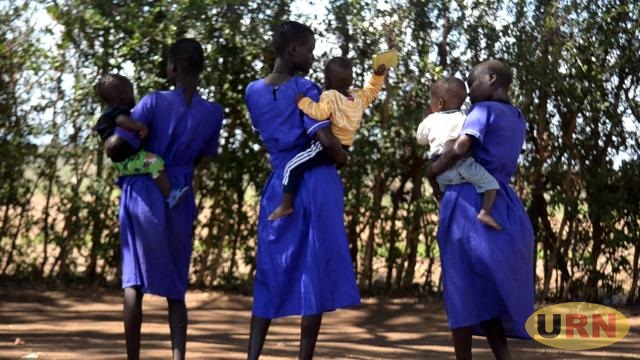
Kampala, Uganda | THE INDEPENDENT | Despite years of policy reform by the Ministry of Education and Sports, the return of teenage mothers to school remains uneven and contested across Uganda.
A baseline survey conducted by Fields of Life, which supports education programmes in rural districts in eastern Uganda, found persistent confusion among teachers, parents, and local leaders about how the re-entry process should be implemented.
Peter Elumu, who supports monitoring and evaluation at the organization, said that many stakeholders either lack full knowledge of the government guidelines or apply them inconsistently. As a result, girls who attempt to resume schooling often face hesitation, stigma, and informal barriers at the school gate.
“This knowledge gap often results in hesitation, stigma, or procedural lapses that hinder girls from returning to class effectively. Even some government officials and teachers are unaware of the government policies relating to this,” Elumu said.
The education ministry first issued Guidelines for the Prevention and Management of Teenage Pregnancy in School Settings in 2015 and revised them in 2020 after a surge in teenage pregnancies during the Covid 19 school closures.
The revised guidelines provide for unconditional re-admission of adolescent mothers once the baby reaches six months. Schools are required to prioritise the girl’s right to education and admit her without punitive conditions.
Yet policy on paper often clashes with practice on the ground. Tepista Kayendeke, headteacher of Kasiebai Primary School in Butebo District, said entrenched attitudes still shape decisions.
“Many in the community view pregnancy as marking the definitive end of a girl’s academic journey, reinforcing stigma and discouraging families from pursuing readmission,” she said.
Kayendeke said that for years, re admitting a teenage mother was rare, even though many of the pregnancies occur under coercive or vulnerable circumstances.
She added that some schools, especially faith-based institutions, have long hesitated to take the girls back, arguing that their presence might influence other learners.
Under the Ministry guidelines, parents or caregivers can report noncompliant schools to district education officers. Awareness and enforcement of this provision remain inconsistent, particularly in rural areas.
Available district records show that Butebo currently has officially re-enrolled 144 teenage mothers. However, that many more remain out of school in surrounding communities. In districts such as Namutumba and butaleja consolidated data on re entry cases remain unavailable, which points to gaps in tracking and reporting.
Rosette Nanyanzi, the Gender Technical Advisor at Ministry of Education, said sustained engagement with all actors remains critical. She cited local governments, district education officers, school management committees, teachers, learners, and parents as central to making the re-entry policy work.
Nanyanzi also added that many interventions focus on schools while neglecting the home environment. In her view, weak parenting structures and limited household support continue to undermine efforts to return teenage mothers to class and keep them there.
In a bid to close persistent gaps in re-enrolment and retention, Fields of Life, in partnership with Hamiza Development Foundation, has launched a three year, 7.2 billion shilling intervention titled the I Am Girl Project, aimed at strengthening school re entry systems.
The three-year programme will run in Butebo, Namutumba, and Butaleja districts, targeting 40 schools and more than 120 surrounding communities. The project aims to support 26,290 adolescents, including 14,460 girls and 11,830 boys, to enrol, participate in, and complete their education across 34 primary schools and six secondary schools in the three districts.
Moses Magara, the project officer, said the initiative will support both schools and communities to strengthen re-enrolment systems and improve retention of adolescent mothers.
He explained that beyond stakeholder engagement, the project will provide each re-enrolled teenage mother with a monthly cash voucher of 30,000 shillings to cater for childcare needs at home. The programme will also cover school fees and provide scholastic materials to ease the financial burden on families.
Magara added that to strengthen long term outcomes, the beneficiaries will receive vocational skills training during school holidays at selected technical institutions. The aim is to equip the young mothers with income generating skills so they can support themselves and their children after the project ends and reduce the cycle of repeated teenage pregnancy.
The 2022 Uganda Demographic and Health Survey (UDHS) shows that 24 percent of girls aged 15 to 19 have begun childbearing. Teenage pregnancy remains higher in rural areas, where the rate stands at about 25 percent compared to 21 percent in urban settings.
Information from the Economic Policy Research Centre further shows that despite national policies such as the National Strategy to End Child Marriage and Teenage Pregnancy 2022/23–2026/27 and the National Strategy for Girls’ Education, about 70 percent of teenage mothers fail to return to school after giving birth.
***
URN