The Independent Uganda: You get the Truth we Pay the Price


A total of US$2.2bn has gone to local firms, 17,000 jobs created & a skilled generation is ready for first oil
Kampala, Uganda | JULIUS BUSINGE | As Uganda stands on the cusp of its ‘first oil’ in late 2026, the nation is witnessing a paradigm shift in its oil and gas narrative—from one of potential to one of tangible value retention and local empowerment.
The 6th Annual National Content Conference held from Dec.3-4 in Kampala, themed “Beyond the Drill,” served as a powerful audit of this transition, revealing landmark achievements in local participation that now form the bedrock for the upcoming 25-year production phase.
Okasai Opolot, the Minister of State for Energy, set the stage by highlighting the scale of the resource: 6.65 billion barrels of oil in place, with 1.65 billion barrels economically recoverable, positioning Uganda as a significant mid-tier African producer.
Yet, the true measure of progress, he stressed, lies in “building resilient institutions, empowering local enterprises, and developing a skilled workforce.”
The data presented by Peninah Aheebwa, PAU’s Director for Economic and National Content Monitoring, quantified this ambition.
Since 2017, a total of USD 7.2 billion in contracts have been awarded by oil companies. Crucially, Ugandan companies have secured USD 2.2 billion of this sum, representing a 27% national content retention rate.
The sector’s total investment had reached USD 9.96 billion by the end of 2024, with an additional USD 423.6 million expected annually for over 20 years during operations.
Jobs, skills, and technology transfer
The human impact of this investment is profound. The sector currently employs 17,000 Ugandans directly, constituting 89% of the direct workforce.
A detailed breakdown shows Ugandans hold 63% of management positions and 93% of technical roles. Over 14,000 nationals have been upskilled through institutions like Makerere University and the Uganda Petroleum Institute Kigumba (UPIK).
Technology transfer is moving beyond theory. Over 35 joint ventures or partnerships have been formed, facilitating the handover of technical software, equipment, and contracts worth USD 338.8 million.
TotalEnergies’ Tilenga Project alone has invested over USD 13 million in capacity building. Its Tilenga Academy is a flagship initiative, sending 200 Ugandan youths for specialized production operator training in France, Oman, and Malaysia.

Project milestones
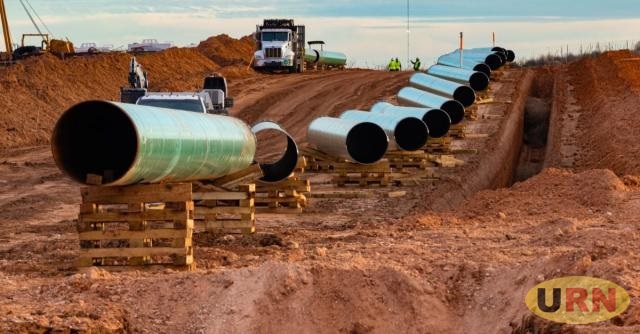
Physical progress across mega-projects underscores the imminent operational shift. The Kingfisher project is 74% complete, with all wells for First Oil drilled. The larger Tilenga project is 60% complete, with 160 of its 420 wells drilled and its Central Processing Facility structural work well advanced. The East African Crude Oil Pipeline (EACOP) is over 75% complete, with 99.4% of land acquisition finalized.
Ernest Rubondo, executive director of the Petroleum Authority of Uganda (PAU), and TotalEnergies’ presentation outlined the evolving opportunity landscape.
The ongoing construction phase still offers Tier 2 and 3 subcontracting chances. However, the focus is intensifying on the production phase, requiring specialized services in mechanical maintenance (e.g., compressor and turbine upkeep), electrical systems, instrumentation, production chemicals, laboratory services, and pipeline inspection.
Navigating challenges
The journey is not without hurdles. Presenters cited challenges including delayed payments, abuse of joint venture provisions, and gaps in quality certifications and financial capacity among local firms.
Strategies to overcome these include ring-fencing locally available services for Ugandans, enforcing rigorous supplier monitoring, and promoting strategic partnerships with clear knowledge-transfer key performance indicators according to attendees of the conference.
The overarching vision was aptly captured by Michael Atingi-Ego, Governor of the Bank of Uganda. Quoting economists Collier and Stiglitz, he stated, “The real test is not in extracting resources, but converting them into productive assets.” He emphasized that the USD 11 billion already invested must lay a foundation that outlives the oil itself, creating “empowered Ugandan firms, skilled workers, and resilient communities.”
He welcomed the news that Uganda is set to become an oil-producing country but cautioned that the development must be managed with long-term thinking. He emphasised that the country should use oil revenues to build a strong, diversified non-oil economy that can sustain future generations long after the oil is depleted.
He said: “By investing in infrastructure, skills development and national competitiveness under the government’s tenfold growth strategy, Uganda can transform its oil resources into lasting prosperity and regional leadership, ensuring the benefits are felt not only today but by generations to come.”
As the conference concluded with the National Content Awards, the message was clear: Uganda’s oil age has begun not with the drill bit, but with the deliberate cultivation of national capacity.
The milestones achieved in value retention, job creation, and skills development are the first fruits of a strategy aiming to ensure the wealth beneath the ground translates into lasting prosperity above it.