The Independent Uganda: You get the Truth we Pay the Price


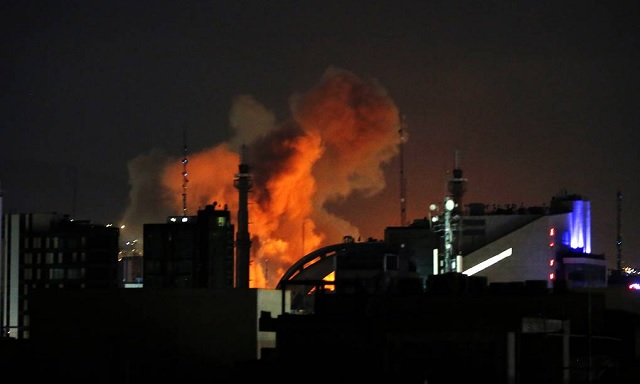
CAIRO, EGYPT | Xinhua | As U.S.-Israeli strikes on Iran entered their fourth day, global reactions remained sharply divided, with some condemning the initial strikes, others criticizing Iran’s retaliatory actions, and many urging de-escalation.
Here’s a quick look at the international responses:
THOSE CRITICIZING U.S.-ISRAELI STRIKES:
— Russia
Russian Foreign Minister Sergey Lavrov on Tuesday described U.S.-Israeli strikes against Iran as an act of aggression and called for an immediate cessation of hostilities, warning that attacks on Iran could push not only Tehran but its neighbors to seek to acquire nuclear weapons. The widening conflict in the region raises the risk that nuclear proliferation issues could spin out of control, Lavrov said.
— Spain
Spanish Prime Minister Pedro Sanchez on Saturday condemned U.S.-Israeli “unilateral military action” against Iran, calling it an “unjustified” and “dangerous military intervention” outside the bounds of international law.
In a firm break from U.S. policy, the Sanchez government has also denied U.S. permission to use Spanish bases or facilities for military operations against Iran, saying any such use must comply with international law.
While criticizing the initial strikes, Spain also condemned Iran’s retaliatory attacks on Gulf countries.
Madrid called for Europe to adopt a stance of “balance and moderation,” urging all parties to pursue de-escalation and a return to diplomatic negotiations.
— Pakistan
In a social media post on Tuesday, Pakistani Defense Minister Khawaja Asif called Israel a driving force behind instability in the Muslim world and a “threat to humanity,” warning that the war on Iran threatens Pakistan’s security.
THOSE CONDEMNING IRAN’S RETALIATION:
— Saudi Arabia
Saudi Arabia slammed on Tuesday an overnight Iranian attack on the U.S. embassy in Riyadh, describing it as a “treacherous” assault in an official statement. The Saudi Foreign Ministry denounced the attack “in the strongest terms” and reaffirmed the kingdom’s right to take all necessary measures to defend itself and its interests, including the option to respond to any “aggression.”
— Kuwait
Kuwait’s Foreign Ministry on Tuesday condemned “in the strongest terms” an Iranian attack on the U.S. embassy in the country, calling it “treacherous” and “a flagrant violation of all international norms and laws.” It also reaffirmed the country’s right to take all necessary measures to “protect its security, the safety of its territories, its citizens, and the residents therein.”
— Bahrain
The General Command of Bahrain Defence Force on Tuesday condemned Iran’s strikes as a violation of international humanitarian law and the UN Charter, noting that attacks targeting civilians and civilian infrastructure run contrary to international conventions and humanitarian standards. It said that its air defence systems have destroyed 73 missiles and 91 drones launched by Iran.
— Qatar
Qatar’s Foreign Ministry on Monday condemned Iranian attacks targeting civilian areas and facilities, stating that the strikes have crossed “every red line.” The Qatari military said it shot down two Iranian Su-24 military aircraft Monday evening and intercepted multiple missiles and drones.
— Britain
British Prime Minister Keir Starmer on Sunday accused Iran of pursuing a “scorched-earth strategy” in the region, saying that his government has agreed to a U.S. request to use British military bases for “defensive” strikes on Iranian missile sites.
Yet Starmer stressed that Britain has learned lessons from the “mistakes of Iraq,” emphasizing that Britain was not involved in the initial strikes on Iran and “will not join offensive action now,” citing the need for a lawful basis and a clear plan.
THOSE URGING DE-ESCALATION:
— China
Chinese Foreign Minister Wang Yi said Tuesday that China calls for an immediate cessation of military operations to prevent the conflict from further escalating and spiraling out of control. “The use of force cannot truly resolve the issue,” Wang said. “Instead, it will create new problems and grave repercussions.”
— Oman
Oman’s Foreign Minister Badr bin Hamad al-Busaidi said on Tuesday that off-ramps for de-escalation remain “available” and urged “an immediate ceasefire and a return to responsible regional diplomacy.”
Oman had been mediating indirect talks between Iran and the United States before the U.S.-Israeli strikes starting on Saturday.
— India
India on Tuesday renewed its call for dialogue and diplomacy, urging an early end to the ongoing conflict. In a statement, the Ministry of External Affairs reaffirmed that it has urged all sides to exercise restraint, avoid escalation, and prioritize the safety of civilians.
— The United Arab Emirates
The UAE Ministry of Foreign Affairs on Tuesday reiterated the country’s call for de-escalation and dialogue to prevent further deterioration of the situation in the region.
The ministry also reaffirmed that it has not changed its defensive posture though having detected more than 1,000 Iranian attacks, a number exceeding the total number faced by all other targeted countries combined. It stated that it remains a non-party to the ongoing conflict. ■