The Independent Uganda: You get the Truth we Pay the Price


Bobi Wine will enjoy camera for a few months; then it will be business as usual
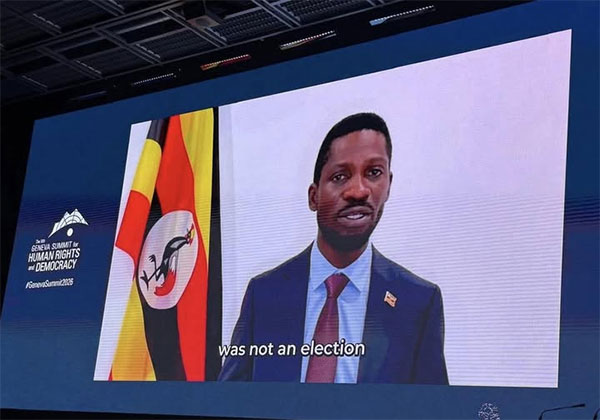
COMMENT | OBED K KATUREEBE | Robert Kyagulanyi, a.k.a. Bobi Wine, is in exile in the USA, where he is meeting some leaders, lobbying them to sanction the top leadership in Uganda. To wit, President Yoweri Museveni and the Chief of Defence Forces, Gen. Muhoozi Kainerugaba. In his view, these two denied him victory in the January 2026 general elections.
Kyagulanyi left Uganda after the January 2026 general elections, claiming he was running away from possible arrest. However, the government still denies that it had any intentions of arresting him.
Poor Kyagulanyi, like Gen. David Sejusa before him, Kizza Besigye, Col. Samson Mande, the late Col. Anthony Kyakabale, Maj. Herbert Itongwa and others, who, after political disagreements with President Museveni, ran to the West and tried to wow the leadership in those capitals to stop any cooperation with President Museveni but were roundly rejected. What followed was frustration and isolation in those freezing capitals. They finally thought of making peace with President Museveni, and they came back to Uganda. All of them are now free men enjoying their country.
The West that these people run to after political defeat are not fools. These countries have better intelligence networks in Uganda and in the region that give them thorough reports of what is happening in Uganda. Mere rhetorical statements that Museveni is a dictator who does not want to live with the opposition cannot be believed. These people have their own intelligence that tells them exactly what Uganda and who President Museveni is. Therefore, any skewing of stories from Uganda, trying to bias leaders in the Western capitals, will certainly fall flat. Without a doubt, they will rely more on their own intelligence than reports from disgraced political actors.
In fact, from what has been gathered, most of the people Kyagulanyi has met so far are telling him to explore avenues of dialoguing with the leadership of the NRM. And this, of course, does not require the intervention of the Mzungu (White person) in the USA or any other Western capital. Uganda has enough eminent persons to handle that.
Kyagulanyi is yet to be more frustrated, because in the near future even the chance they are offering to meet him will be no more. He will be making phone calls that will go unanswered. Or else, he will be answered with rude remarks.
The earlier Kyagulanyi realises that the only way to rediscover his political struggles is by engaging Ugandans and not the Western world. He needs to return and do critical evaluation of methods of work. He has to pose critical questions to his party colleagues on why the party performed the way it performed. He inevitably must engage those he is opposed to, especially the ruling NRM in general and President Museveni in particular.
This fallacy that engaging President Museveni is betraying the Opposition is totally wrong. Unfortunately, that perception has been created, and those that have fallen for it are making irredeemable political mistakes. To the contrary, the opposition that is engaging President Museveni are making strong bargains in favour of Ugandans.
Life in exile is described as an “exasperating”, “poisonous”, and “terrible to experience” existence, characterized by an unhealable rift between an individual and their home country. It is a state of profound alienation, often involving involuntary displacement, where individuals feel cut off from their secure, familiar surroundings and forced into a foreign, often hostile, environment.
Whatever disagreements Kyagulanyi could be having with Yoweri Museveni, the two can talk it over, and a working relationship can be forged. Political disagreements can only be resolved by the two politicians. The West, where we tend to run looking for powerful godfathers, is not competent enough to appreciate our issues and be able to amicably resolve them.
Kyagulanyi will be given an audience on a few media platforms, but that can only be for a few months. What will then follow will be a total media blackout, because he will be having nothing new to tell the world. Then boredom will kick in. Feelings of isolation and loneliness will grow in volumes, which is not good for his mental health.
Exiles often experience deep feelings of abandonment, loneliness, and fear, feeling disconnected from both their past and present reality. The exiled person may feel that their life has stopped or that time is being measured only from the moment the exile began, leading to a nostalgic, often stagnant existence.
There is a traumatic realisation that “there is no return to the familiar”, forcing the creation of a new, often uncomfortable life. Exiles frequently face “powerlessness” and loss of control, struggling with new, unfamiliar rules or even visa and travel restrictions.
The feeling of being “cut off” or a stranger, even without moving, caused by trauma, divorce or estrangement. Often used in religious contexts, this describes feeling like a stranger in one’s own country or culture, a feeling of not belonging because of different values or beliefs. The earlier he returns to Uganda, the better for Kyagulanyi and his family.
***
 The writer works with Uganda Media Centre