The Independent Uganda: You get the Truth we Pay the Price


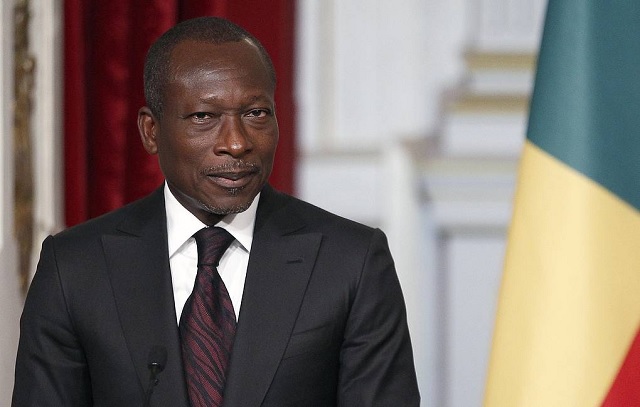
COTONOU |Xinhua | Benin’s government said on Sunday that an attempted military mutiny had been foiled in Cotonou, the country’s economic capital and largest city, after armed soldiers briefly took over state television to declare President Patrice Talon was removed from office.
How did a country that was long considered stable in West Africa find itself facing such a threat? What triggered it, and how did the relevant parties react?
What happened?
Earlier Sunday, a group of soldiers, identifying themselves as the “Military Committee for the Refoundation,” convened and decided that “Mr. Patrice Talon is dismissed from his functions as president of the republic.”
Gunshots were reported at Camp Guezo, near the president’s residence in Cotonou, and the soldiers took control of the state broadcaster Benin TV and announced that Talon had been “removed from office,” said local media.
However, the Presidency said the president is safe and that government forces have regained control of the situation.
Benin’s armed forces have foiled an attempted mutiny aimed at destabilizing the state and its institutions, Alassane Seidou, Beninese minister of interior and public security, said in a statement on Sunday.
According to the minister, the armed forces and their command, “faithful to their oath,” responded in a republican manner and were able to keep the situation under control, thwarting the attempt. The government called on the public to continue their activities as normal.
Speaking to the French-language pan-African weekly magazine Jeune Afrique on Sunday, Romuald Wadagni, Beninese minister of economy and finance, also said the situation was “under control.”
“The mutineers are trapped. We are clearing the area, but it is not over yet. We are safe,” he said, adding that helicopters were patrolling the city and armed forces had heavily secured central Cotonou.
The Economic Community of West African States (ECOWAS) Commission said on Sunday that it had ordered the deployment of the ECOWAS standby force to Benin, which was composed of troops from Nigeria, Sierra Leone, Cote d’Ivoire and Ghana, and will assist the Benin government and military in maintaining the country’s constitutional order and territorial integrity.
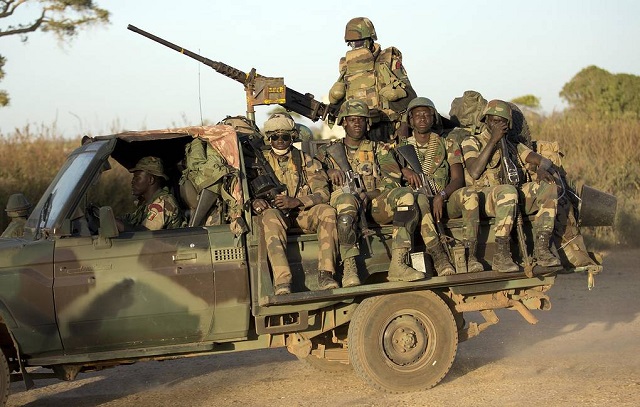
The Nigerian presidency announced that, at Benin’s request, President Bola Ahmed Tinubu has ordered the Nigerian armed forces to assist Benin in containing armed groups and safeguarding its constitutional institutions.
With Nigeria’s assistance, the armed forces of Benin regained control of the situation and flushed the coup plotters out of the national TV, it said.
Local residents told Xinhua by phone that armed soldiers had been deployed at key intersections in Cotonou and its surrounding areas. Residents continued their daily activities, and major markets remained open.
What’s behind the coup?
Benin, located in West Africa, covers an area of about 112,000 square km and has a population of roughly 14 million.
Historically considered one of the more peaceful and stable countries in the region, Benin has nevertheless experienced several coups and attempted coups after gaining independence from France in 1960.
Talon first came to power in March 2016 and was re-elected in April 2021. He was scheduled to step down after the presidential election in April 2026. Wadagni had been widely regarded as the frontrunner, while opposition candidate Renaud Agbodjo was barred by the electoral commission due to insufficient sponsorship.
In November, the national legislature approved an extension of the presidential term from five to seven years, while retaining the two-term limit.
How have relevant parties responded
UN Secretary-General Antonio Guterres is deeply concerned by the attempt to unconstitutionally seize power in Benin, his spokesperson Stephane Dujarric said in a statement Sunday.
“The Secretary-General unequivocally condemns any attempt to undermine democratic governance in Benin, which could also further threaten the stability of the region,” said Dujarric.
African Union Commission (AUC) Chairperson Mahmoud Ali Youssouf on Sunday “strongly and unequivocally” condemned the attempted military coup in Benin.
“Any form of military interference in political processes constitutes a grave violation of the fundamental principles and values of the African Union,” the chairperson said in a press statement.
Youssouf called on all actors involved in the coup attempt to immediately cease all unlawful actions, to fully respect the country’s constitution, and to return without delay to their legitimate barracks and professional obligations.
Meanwhile, the AUC chief expressed “deep concern over the troubling proliferation of military coups and coup attempts across parts of the region.” He underscored that such actions continue to undermine continental stability, threaten democratic gains, and embolden military actors to act outside constitutional mandates.
ECOWAS, in a statement issued in Abuja, Nigeria’s capital, expressed “consternation” over the attempted mutiny and strongly denounced the unconstitutional action, describing it as a subversion of the will of the Beninese people.
The regional bloc called for full respect of the constitution, commended the efforts of the government and the republican army in bringing the situation under control, and held the plot leaders accountable for any loss of life or property.
ECOWAS said it would “support the government and people of Benin by all necessary means, including the potential deployment of its regional standby force, to defend the Constitution and territorial integrity of the country.” ■