The Independent Uganda: You get the Truth we Pay the Price


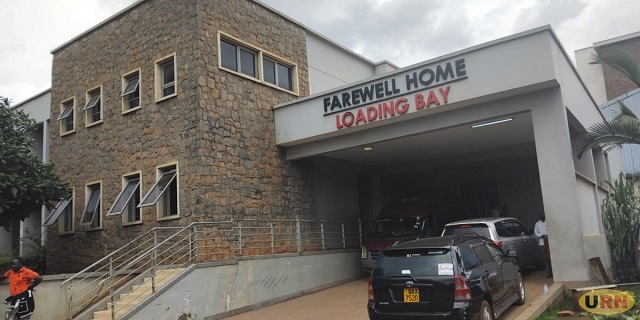
Kampala, Uganda | URN | Senior pathologists have stepped forward to clear the air following a wave of public concern regarding the management of the Mulago National Referral Hospital mortuary.
Addressing allegations of illegal fees, unexplained delays, and the nature of post-mortems, the medical team is working to “demystify” an institution often shrouded in grief and rumour.
The clarification follows an investigation into claims from bereaved families regarding the alleged mishandling of their deceased loved ones.
The most significant revelation from the medical team is that the official cost for services is non-existent. “Services are free,” emphasized Dr. David Alale, a senior pathologist at the facility. “There are no fees for receiving bodies. We offer diagnostic, autopsy, and post-mortem services at no cost.”
Dr. Musoke Shariff echoed this, warning the public against “middlemen” including opportunistic cleaners or even deceptive family members who solicit money from the bereaved.
“All post-mortems are free. Should you pay money? No,” Dr. Shariff stated. He advised the public to identify authorized doctors by their dark blue scrubs and urged anyone facing extortion to use the new QR code complaint system now posted on the mortuary walls.
The pathologists described the department not merely as a storage facility, but as a “critical diagnostic hub.” They revealed that autopsies are conducted for various reasons including verifications to confirm the cause of death as diagnosed by the attending physician, determining the efficacy of treatments and drugs administered before the patient passed, and training the next generation of doctors, as Mulago is the country’s primary teaching hospital.
“Medical autopsies are performed for natural deaths with the consent of the next of kin. However, forensic autopsies are mandatory under the Inquest Act of 1935 (revised in 2023),” Dr Alale said. “These are state-ordered for unnatural deaths, including accidents, suicides, or suspected homicides.”
On average, Mulago pathologists at the facility conduct at least 10 autopsies daily. When asked why families often face long waits to collect bodies, Dr. Alale pointed to social and legal disputes rather than administrative bottlenecks.”Delays usually occur when families cannot agree on burial locations or who is authorized to receive the death certificate,” he noted. In cases of unclaimed bodies, the hospital keeps the deceased for a maximum of one month. “If they remain unclaimed, they are buried in a government cemetery with documented identifying features to assist families who may surface later.”
The facility currently operates three commissioned refrigerators with a capacity of 60 bodies, handling an average of 20 arrivals per day. While the mortuary houses eight refrigerators in total, five remain uncommissioned as current demand does not yet require the additional energy costs.
Dr. Alele says that families are not required to handle bodies themselves as dedicated hospital van and uniformed staff manage transfers from wards in covered trolleys to ensure dignity and confidentiality.
The pathologists also noted that they prioritize cases involving the Muslims community, children and families travelling from distant regions to ease the burden on grieving relatives. Dr. Alele says that paper work to access the body in the morgue takes a minimum of one hour from the time of arrival of relatives.
Addressing persistent rumors of “organ theft,” Dr. Shariff said that “Organs that are dead are useless for transplantation.”He explained that once the heart stops, organs (with the rare exception of the cornea) cannot be repurposed for transplant. He clarified that when organs are examined during an autopsy, it is strictly to understand the disease process such as identifying undiagnosed pneumonia or diabetes to provide the family with a clear answer regarding the cause of death.
According to the pathologists, all deaths from patients in wards or outside must be handled in the mortuary to enable documentation, investigations and enhancement of research since Mulago also serves as a teaching hospital.
****
RELATED STORY
The grueling ‘Battle’ to claim for the dead at Mulago Mortuary