The Independent Uganda: You get the Truth we Pay the Price


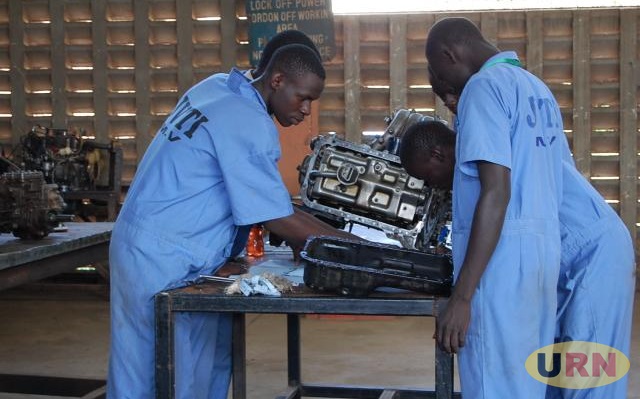
COMMENT | NANTEZA SARAH KYOBE | With results of PLE now out, I urge parents that are planning secondary school life for their children to consider Technical and Vocational Education and Training (TVET) programs that admit students directly from Primary Seven. Learners who enrol in community polytechnics can actually earn an O-level equivalent qualification after completing three years of training.
I know parents are moving up and down in their efforts to find the best secondary schools for their children, even if it means paying placement fees for those considered top choices, before the senior one selection day, scheduled for Thursday, 12th – Friday, 13th February 2026.
But what parents are forgetting is that, in today’s world, employers value practical skills over academic degrees alone. Skilled labor is in high demand, and that’s where TVET plays a crucial role. The belief that TVET is only for poor performers is outdated.
No wonder the Minister of Education and Sports, First Lady Janet Museveni, supports it. While announcing the 2025 PLE exam results, she urged candidates to consider technical and vocational education as a practical option, noting it has the potential to change lives and boost Uganda’s economic growth.
TVET skills help young people in many areas of life. TVET provides specialized technical and vocational training through national certificates and diplomas, with a focus on engineering, construction, and various trades. With TVET, a young person is more likely to get a job and may even create their own. Since the country faces a high unemployment rate, which is a serious problem, it can be reduced.
In Uganda, there are 100 private and 42 government-sponsored TVET institutions. Government-sponsored TVET courses are managed by the Ministry of Education and Sports and offer National Diplomas (ND) and Certificates in technical, agricultural, and vocational fields.
The government-sponsored TVET for Primary Seven (P7) leavers offers three-year Uganda Community Polytechnic Certificate (UCPC) courses, including block laying, motor vehicle mechanics, garment design, electrical installation, plumbing, carpentry, and agriculture, all provided at community polytechnics. These polytechnics are specialized vocational schools overseen by the Ministry of Education and Sports (BTVET) that focus on delivering hands-on, practical, and job-ready skills to youth and Primary 7 graduates.
Requirements include a P7 results slip or recommendation, a passport photo, and a birth certificate or NIN. Admissions are now open.
The Community Polytechnic institutions include Bobi Community Polytechnic (Omoro), Kadogo Community Polytechnic (Mbarara City), Katikamu County South Bbowa Community Polytechnic, Lumino Community Polytechnic (Busia), Lutunku Community Polytechnic (Ssembabule), Mbale Community Polytechnic (Mbale City), Mubende Community Polytechnic (Mubende), Olio Community Polytechnic (Serere), Pacer Community Polytechnic (Pakwach), Rukore Community Polytechnic (Kabale), Namisindwa Technical School, Acaba Technical School (Oyam), Pajule Technical School (Pader), Ngugo Technical School (Rwampara), Kakiika Technical School (Mbarara), Iyolwa Technical School (Tororo), Technical School (Madi-Okollo), Atiak Technical School (Amuru), Namasale Technical School (Amolatar), Lokopio Technical Institute (Yumbe), Sasiira Technical Institute (Nakasongola), Tororo Technical Institute, Bukooli Technical School (Bugiri).
Several scholarship and bursary opportunities are also available for Primary Seven (P7) graduates seeking to attend Technical and Vocational Education and Training (TVET) institutions, which often focus on assisting disadvantaged and vulnerable students.
The government provides sponsorship for students pursuing technical and vocational education at the National Certificate level, with a focus on supporting girls and students with special needs. Application Process: Forms can usually be downloaded from the Ministry of Education and Sports website (www.education.go.ug), district education offices, or specific NGO websites.
We have several testimonials from people who enrolled in the TVET program after graduating from Primary Seven. Among them is Dr Morris Odoch Odrua, who shows that this stigma is unwarranted. While many associate technical and vocational education with last-resort options and a path for those who perform poorly, Odoch, despite his good grades in PLE, attended a technical school and never sat in a secondary school classroom.
Today, he is a renowned civil and structural engineer with a PhD, three master’s degrees, a bachelor’s degree, two diplomas, several certificates, and a legacy of national infrastructure projects. Odoch has no regrets to this day about having joined TVET.
Odoch completed his education at Pawor Primary School and performed well in his exams. He decided to pursue TVET and enrolled at Inde Technical School for the Uganda Junior Technical Certificate. He then continued at Moyo Technical Institute and St Joseph Technical Institute, Kisubi, for Craft Part I and II certificates. His education provided important skills for his engineering career.
Odoch progressed from an unskilled labourer to various engineering positions, earning a bachelor’s degree in Civil and Building Engineering, multiple master’s degrees, and a doctorate in International Construction Management from European Institute for Advanced Studies in Management (EIASM).
Morris’s specialised training in comprehensive bridge engineering in Japan established him as a leading bridge expert in Uganda, and he was appointed project engineer for the new Nile bridge in Jinja. He was called on to lead the Isimba Public Bridge project and recently served as the resident engineer for the Kampala Flyover project.
On that note, master’s degrees and PhDs are possible without a secondary school education, and the benefits of these degrees are accompanied by skills.
*******
 Nanteza Sarah Kyobe works with Uganda Media Centre