The Independent Uganda: You get the Truth we Pay the Price


The exhibition of paintings, installations, sculptures and printed photographs pays tribute to the legacy of Kabaka Muteesa II while prompting conversations around cultural conservation and identity
ARTS | DOMINIC MUWANGUZI | The memory of Sir Edward Frederick Muteesa II is forever etched in the minds of many people across the world. His personality as a charismatic, calm, elegant, and suave individual, but also as a visionary, intelligent, and wise King (Kabaka), was unmatched and endeared him to his subjects and the colonial administrators at the same time. An exhibition celebrating his 100th birthday anniversary recently opened at the Bumu Art Gallery in Mengo-Kampala. The multidisciplinary showcase, including paintings, sculptures, installations, and printed photographs, explores the life and times of the 36th Kabaka of Buganda, inviting the viewers to reflect on his contributions to the kingdom during his 30-year reign but also delicately emphasises the need for cultural conservation in an era of a globalised identity.
The exhibition is divided into two pavilions: traditional art genres (painting, sculpture, and installation) and new art genre (Photography) that allows the different types of audiences to interact with the artworks effectively. The paintings, sculptures and installations are by artists of different career statuses and backgrounds: from emerging and mid-career to established artists.
For example, Professor George Kyeyune a celebrated painter and sculptor, exhibits a painting Gone But not Forgotten that depict a woman seated on a boda-boda (motorcycle taxi) carrying a backpack with the inscription ‘Gone But Not Forgotten, Sir Edward Muteesa 1924-1969’, illustrating the deep affection the ordinary people still have for the Kabaka. Kyeyune’s painting, executed in his studio technique of impasto, conveys much more than the message of immortalizing Muteesa through wording but metaphorically represents the traditional spiritual belief among Baganda that the Kabaka does not die but instead embarks on an unending journey into the forest! Culturally in Buganda there are different proverbs that underscore this belief. This technique of figuratively attaching cultural meaning to the art can also be traced in Samson Xenson Ssenkaaba’s colossal installation titled Cuucu, one of the so many names given to the Kabaka as a symbol of his mystique nature. In Buganda, the Kabaka is believed to be a mystical character with powers over life and death. Xenson’s installation made of bark cloth, gold enameled figurines and cowrie shells evokes both his powerful and divine quality, represented by its immense size and depiction of the subject as a towering figure; symbolising his dominance and omniscience.
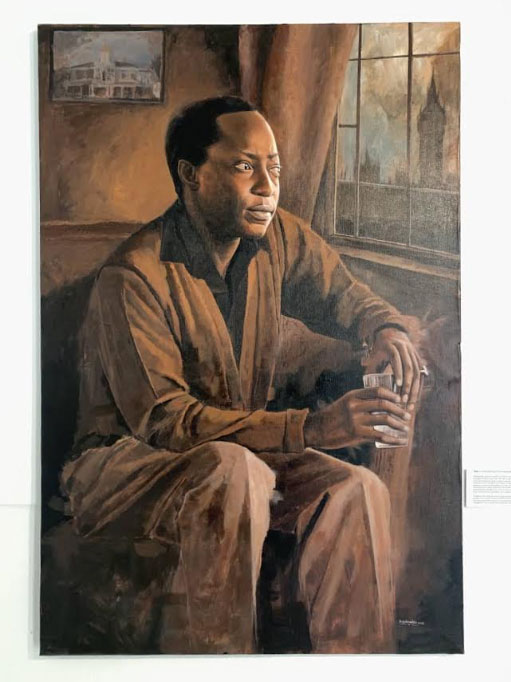
In particular, the portrait A King without His Kingdom by Fred Maiku accurately captures the gloom that surrounded Buganda when the Kabaka was forced into exile in 1966. In this masterpiece drawing, the artist depicts the exiled Muteesa in a contemplative mood seated near a half-open window. The imagery of the king staring out in open space, alone and almost vulnerable symbolizes what lay on the other side of the continent: his kingdom left alone and now exposed to abuse and exploitation by the political regime. This sentiment is appropriately captured in the excerpt from the autobiographical book Desecration of My Kingdom. The powerful message of desolation, anxiety and humiliation that underlies this painting prompts the viewer to reflect not only on the difficult time the monarch was going through in exile but also on the present, where the kingdom is encountering an avalanche of challenges.
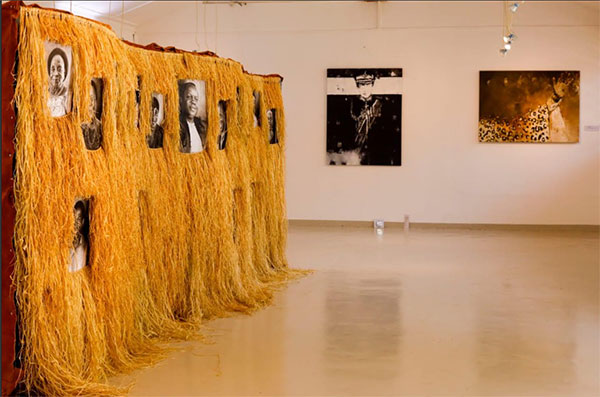
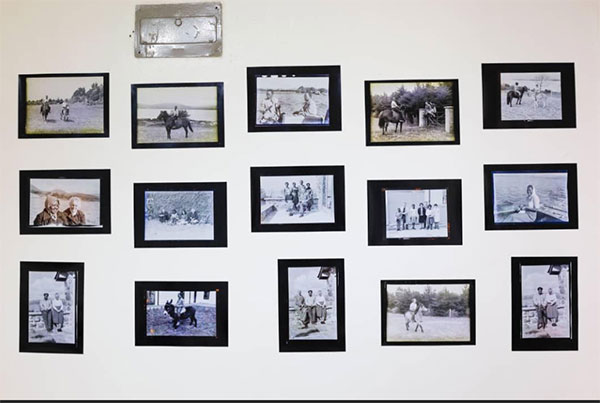
The photographs in the photography pavilion are prints from the local daily Taifa Empya and Dr. A.T Schofield who worked in Uganda in the 1920s and 30s. The photographs divided into different sections including Muteesa II’s Childhood, Family & Friends, Muteesa II The Student, Muteesa II Kabaka Wa Buganda and Muteesa II The President, provide an atmosphere of calm, excitement and normalcy, enabling the viewer to engage with the subject matter in a more intimate manner. For example, the photographs of Muteesa as a young man, both at school and with his family, reveal the ordinary side of him that often sharply contrasted with his royal identity. Muteesa was known for his affinity for an ordinary life, where on many occasions he would socialise with his subjects with no qualms!
This exhibition is monumental in its celebration of Kabaka Muteesa II’s life from birth into exile. His affable nature, coupled with his intellect and wisdom, was pivotal in shaping his legacy as a king, friend, father and statesman. As such, his life has since become an inspiration to many within the Kingdom and far beyond to build strong institutions through exercising integrity, honesty, humility and hard work. The exhibition Centennial Art Tribute ably echoes this inspiration through a multiplicity of art that continues to immortalize him beyond words but through images that speak to the audience in more than one way.
*****
The exhibition is open at Bumu Art gallery located within the premises of Buganda Tourism and Heritage Offices, next to Butikiiro Mengo. The show is curated by Lyton Hillary and Sheila Nakitende.