The Independent Uganda: You get the Truth we Pay the Price


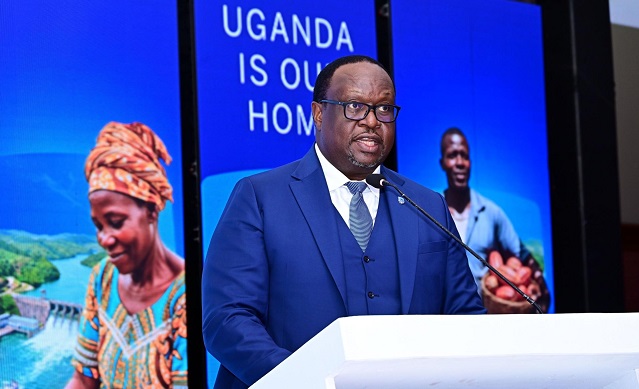
Kampala, Uganda | URN | The financial industry in Uganda enjoyed good business last year, according to financials being released, the latest being Stanbic Uganda Holdings Limited-SUHL, with UGX 591 billion profit after tax. This new record was a jump from UGX 478 billion posted for the year ended December 2024, with Stanbic Bank continuing to be the anchor subsidiary.
Francis Karuhanga, the CEO of SUHL, says that this has enabled the company to offer UGX 360 billion in total dividends to the shareholders, while the return on investment jumped to 26.7 percent, compared to a target of 20 percent. Like with most of those banks that have so far outed their 2025 financial results, increasingly, the non-interest revenues are rising faster than and getting closer to meeting interest incomes, which is the core business of banking.
Total income amounted to UGX 1.44 trillion, and while net interest income grew by UGX 28 billion to UGX 788 billion, non-interest revenues jumped by over UGX 120 billion to UGX 651 billion, reflecting the declining dominance of the non-core business of banking. In the first half, SUHL’s non-interest revenue grew 14.0 percent, contributing 45.8 percent of total income, while net interest income grew only 2.6 percent.
Recent trends in some other selected banks, including DFCU, Absa, and Centenary, also show faster growth in mon-interest revenues, moving towards dominance of total revenues. Aggregate Tier I banks (from Uganda Bankers’ Association/BoU reports) show non-interest income, especially fees, commissions, and foreign exchange income, growing in 2024, often at paces comparable to or exceeding NII in diversification pushes.
Records show that sector profits hit record UGX 1.9 trillion in the financial year 2024/25, with interest income up 10.7 percent overall but non-interest income providing resilience, like foreign exchange, trading gains, and fees from mobile and digital growth. Many banks are shifting toward non-interest for resilience, as high government securities holdings boost interest income but lending margins face competition/high funding costs, according to a financial expert at the Capital Markets Authority.
He reasons that while SUHL is a diversified financial group and therefore expected to have such diverse revenue sources, it would be a concern for the purely banking companies as it would spell a move away from core business, which is lending. Ronald Mataka, Stanbic Bank Chief Finance Officer, says this is resulting from diversification by banks into new activities in the financial industry, which is part of value creation for the customer.
He adds that the current business environment, especially where macroeconomics can change due to any reason, and the lending business is hit, revenues from other segments can help create a buffer for the company. This, according to Mataka, has been boosted by the changing environment, like the volatility of the foreign exchange, which in most cases will bring in more generous revenues for the company.
Overall, he says that lending rose by 16.4 percent to UGX 5.1 trillion to trade, manufacturing, agriculture, and households, with 1.1 trillion going to SMEs. On the fears that banks are moving away from lending to the private sector and especially small and medium enterprises, Stanbic says that instead, they have focused on supporting the SMEs, particularly since the COVID-19 pandemic.
Tunde Thorpe, Executive Head of Business and Commercial Banking, says that they have focused on making SMEs less risky to lend to and more bankable. This has seen them move away from focusing on collateral to data and capacity to pay, which is reducing the non-performing loan ratios among SMEs to about 0.5 percent.
Overall, the industry is being supported by “a steadily improving macroeconomic environment,” with Uganda’s economy expanding by 6.3 percent in 2025, amidst easing monetary conditions and renewed investor confidence. Inflation remained well contained at an average of 3.6 percent, while the Central Bank Rate moderated to 9.75 percent.
The Ugandan shilling strengthened to an average of UGX 3,600 against the US dollar, compared to UGX 3,755 in 2024, reflecting improved foreign exchange inflows and reserve buffers. Despite ongoing fiscal pressures, market sentiment was buoyed by progress toward first oil production, reinforcing confidence in Uganda’s medium-term growth trajectory.
The Group’s strong results were underpinned by the performance of Stanbic Bank Uganda, which continues to be the primary driver of the franchise. In his first year as Chief Executive, Mumba Kalifungwa oversaw strong balance sheet growth, supported by deepening customer trust and enhanced operational efficiency, with customer deposits growing by 13 percent to UGX 8 trillion.
***
URN