The Independent Uganda: You get the Truth we Pay the Price


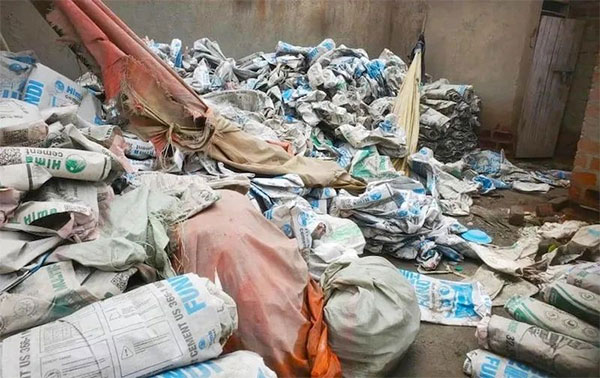
COMMENT | JAMES ODONG | When police raided a hardware outlet in Luweero recently and recovered bags of suspected counterfeit cement, it was not just another criminal case — it was a stark reminder of a silent threat lurking in Uganda’s construction sector.
As someone who has spent years on construction sites, I can say this with certainty: fake cement is one of the most dangerous materials you can unknowingly build with. It doesn’t just waste money; it compromises lives.
The Luweero operation, which uncovered cement allegedly repackaged using brands like Hima Cement, Tororo Cement and Simba Cement, reflects a wider and more troubling trend.
According to the Uganda National Bureau of Standards (UNBS), counterfeiters are increasingly mixing genuine cement with cheaper materials such as stone dust or lime, then sealing the mixture in branded bags and affixing fake certification marks.
To the untrained eye, the product looks real. But structurally, it is a disaster waiting to happen.
On a construction site, cement is everything. It is the glue that holds concrete together. When it is compromised, the entire structure is compromised.
I have seen buildings where walls begin to crack within months. In more serious cases, slabs weaken and columns fail. Often, investigations trace the problem back to poor-quality or adulterated cement.
What makes counterfeit cement particularly dangerous is that the damage is not always immediate. It can take time — months, even years — before the structural weaknesses reveal themselves.
Regulators and industry players are working together, but enforcement alone will not solve the problem. Counterfeiters are adaptive — they exploit gaps in awareness as much as gaps in regulation.
Manufacturers have been vocal about the risks. “We strongly condemn this illegal activity, which puts the lives of our customers at severe risk and threatens the integrity of our industry,” said Philemon Mubiru of Hima Cement, following the Luweero arrests.
As builders, we often focus on design, cost and timelines. But material integrity is just as critical. The truth is simple: a building is only as strong as the materials used to construct it.
The Luweero incident should not be viewed in isolation. It is part of a broader challenge affecting Uganda’s construction ecosystem — one that requires vigilance from everyone involved.
If you are building a home, supervising a site or supplying materials, take the extra time to verify what you are using. Because when it comes to cement, what you cannot see today could cost you everything tomorrow.
The good news is that spotting fake cement is not impossible. The Luweero case should serve as a wake-up call for every builder, contractor and homeowner.
- Here are practical checks I always recommend:
1. Start with the source
Always buy from authorised dealers. Avoid roadside suppliers or deals that seem unusually cheap. In construction, cheap is often expensive in the long run.
2. Examine the packaging closely
Genuine bags have sharp printing, consistent branding and proper sealing. Counterfeit bags often have spelling errors, faded colours or signs of reuse.
3. Check the UNBS quality mark
The UNBS Q-mark is a key assurance of quality – but it can be forged. Look carefully. If it appears tampered with or poorly printed, be cautious.
4. Feel the cement
Good cement is smooth, fine and cool to the touch. If it feels gritty, contains lumps or feels warm, that is a red flag. Moisture or adulteration may already have compromised it.
5. Confirm the weight
A proper bag should weigh 50 kilogrammes. Counterfeiters sometimes reduce the weight to increase profit margins.
6. Ask for an invoice. Documentation is not just paperwork — it is protection. It allows traceability and accountability.
*****
The author is a construction expert